LOCAL HANDYMAN LONDON

HANDYMAN WIMBLEDON / REPAIRS & FITTING
Handyman Wimbledon.
- Bedroom assembly, living-room fittings and kitchen or bathroom repairs planned together.
- We agree the room sequence so preparation comes before the finishing work.
- Every item is checked against the task list, with drying and follow-up requirements explained.
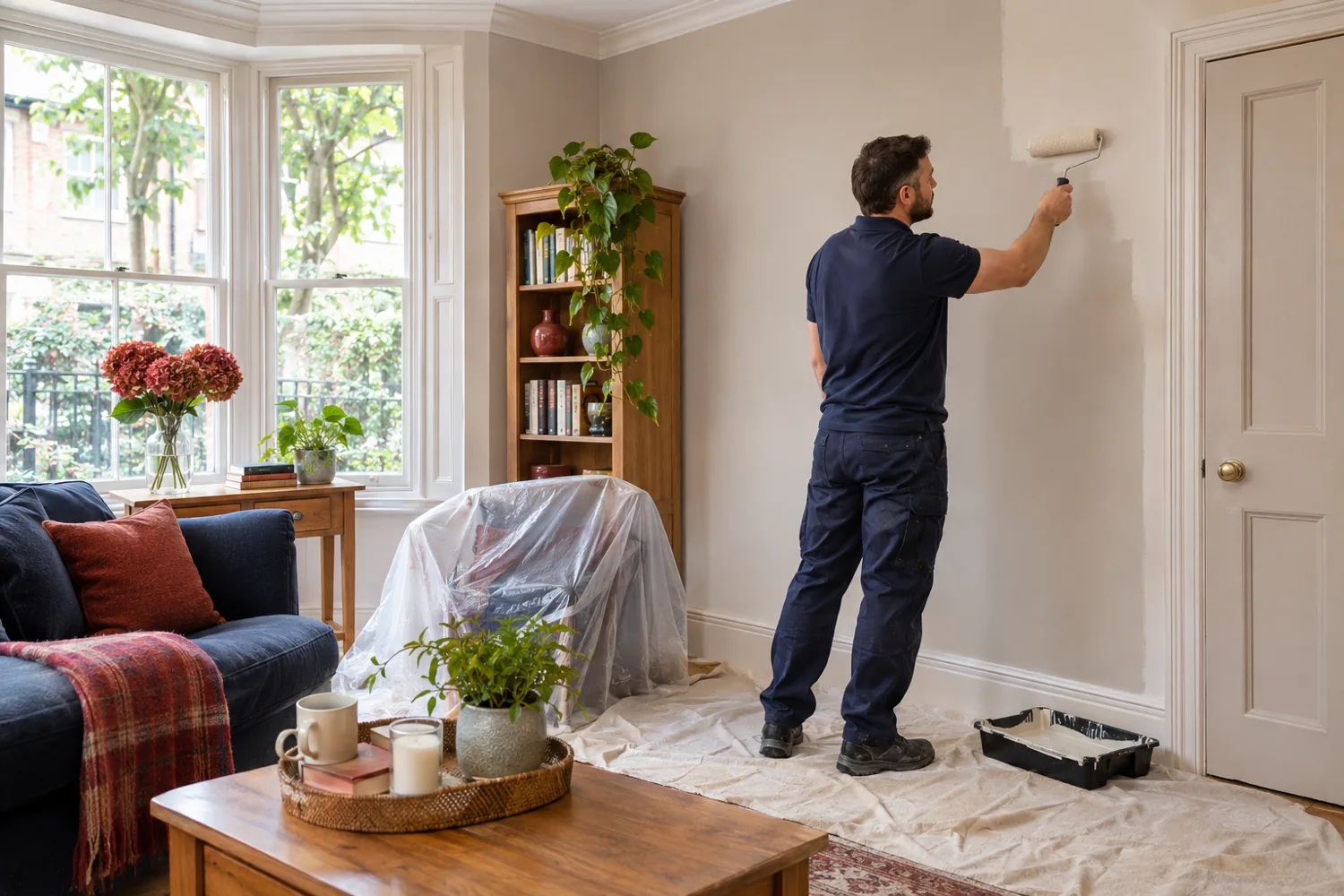
MAKE YOUR
SPACE WORK.
Painting. Fitting. Fixing.
ROOM-BY-ROOM WORK
Can we plan repairs around rooms that remain in use?
We can review the tasks by room and agree an order before booking. We identify the working space, fittings that need to stay accessible and any interruption to water or room use. A painting stage or missing component can affect the sequence, so several tasks do not automatically mean one uninterrupted visit.
PRODUCTS AND PREPARATION
What makes a Wimbledon repair list ready to assess?
We need the specific fittings or faults, product links for supplied items and photographs showing the work area. We discuss priorities, compatible replacement parts and who supplies materials. The actual address, access and building conditions are checked rather than assuming that every Wimbledon property has the same layout or requirements.
HANDYMAN WORK IN WIMBLEDON
Room by room. Repair before finish.
We arrange handyman repairs and fitting work in Wimbledon around the rooms and items that need attention. A household list may include a bed to assemble, a door that catches, a blind to fit and a tap fault. We review the relationship between those jobs so the work area, materials and finishing stages are planned in a sensible order.
We carry out suitable repairs in homes and business interiors, with instructions agreed for each task. We discuss how the property will be used during attendance and who can approve changes. Where a repair affects later decoration or requires a product to cure, we explain that sequence before promising a finished result at the end of a single appointment.
REPAIRS AND INSTALLATIONS
The jobs in each part of the property.
BEDROOMS
Bedrooms: assembly, storage and access
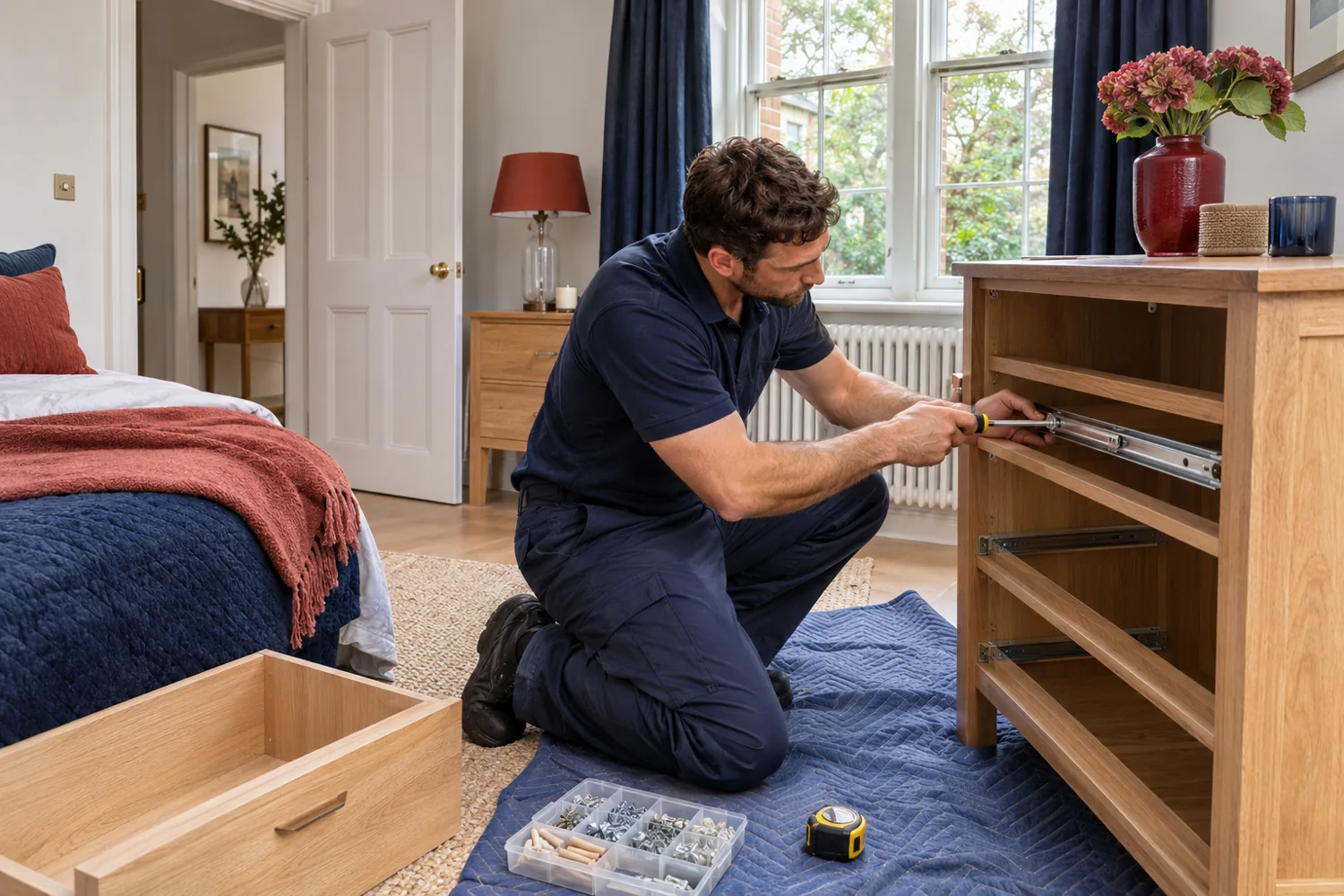
We assemble supplied beds, wardrobes, bedside units and drawer storage in the agreed bedroom. We review the model, quantity and complete components, then establish enough space to lay out and build the item. Existing furniture, the mattress and access to the doorway are discussed before panels and tools are brought into position.
We follow the manufacturer’s assembly sequence, fit the hardware and adjust doors or runners before handover. Storage-bed mechanisms and tall wardrobes have their own clearances and handling requirements. We assess required wall restraints with the supporting surface and permission to drill. We explain any missing component or damaged panel before proceeding with work that would make it harder to replace.
LIVING AREAS
Living rooms: screens, shelves and useful fittings
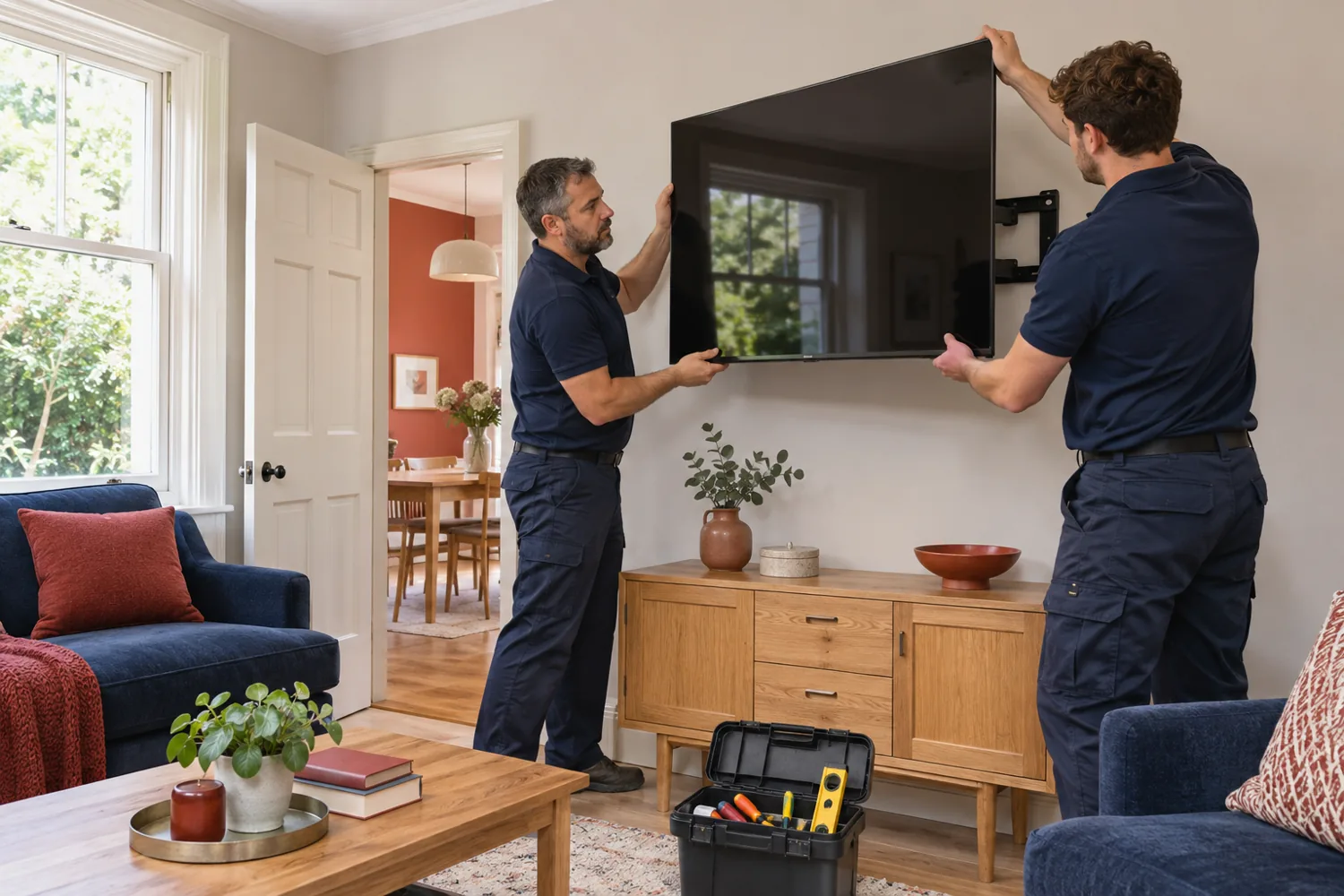
We assess television brackets, shelves, mirrors and other suitable wall accessories according to the item and supporting structure. We agree the viewing or fitting position before marking holes, considering furniture, doors and access to the controls or connections. A screen’s diagonal size alone does not establish the correct bracket or wall anchor.
We check supplied fittings and discuss what additional components may be required. For televisions, we distinguish mounting from cable concealment, new sockets and signal or network faults. For shelves, we review intended use and the condition of the fixing position. If another trade, surface repair or reinforcement is needed, we explain that before treating the item as ready to install.
KITCHEN & BATHROOM
Kitchen and bathroom: faults before finishes
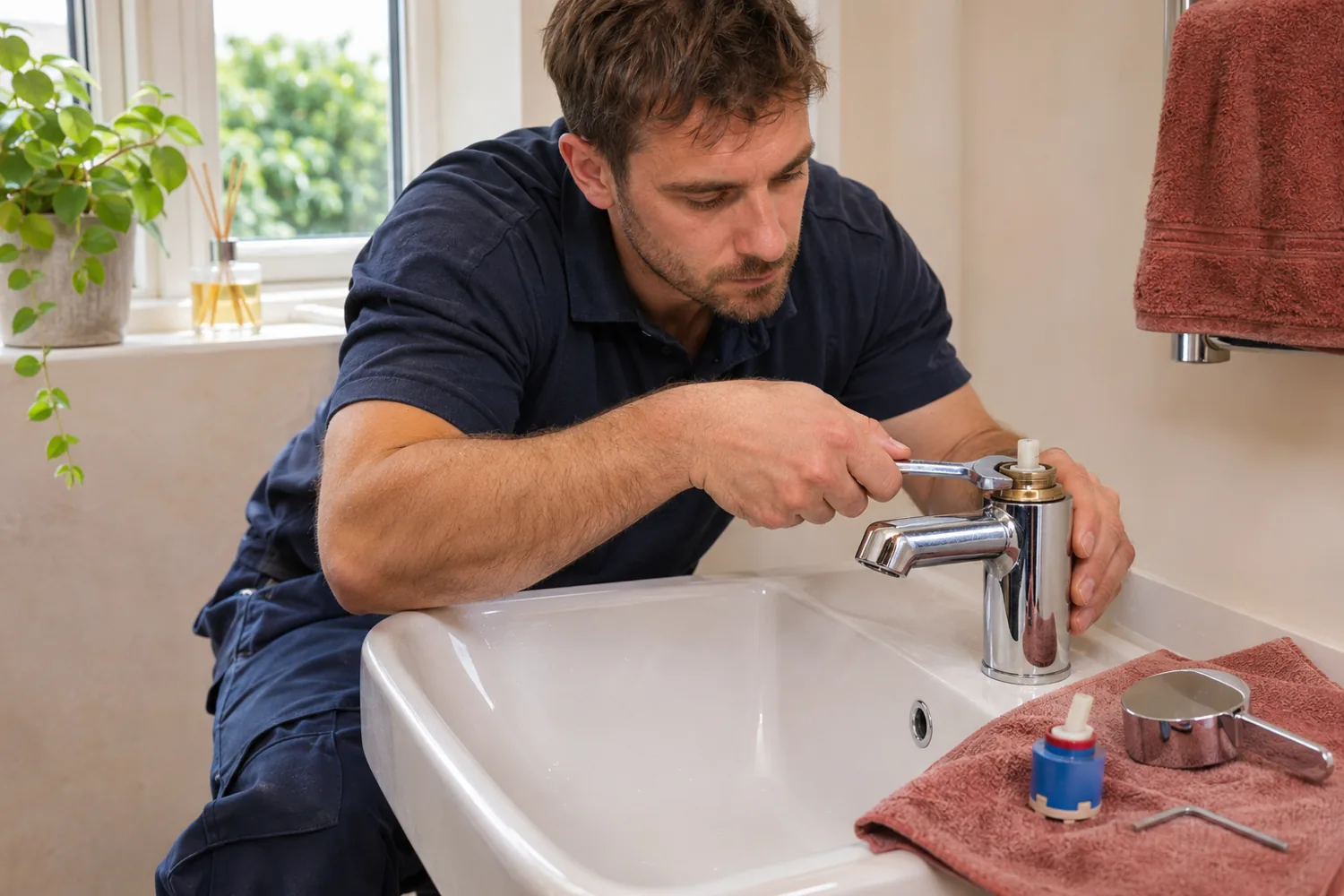
We assess suitable minor plumbing faults such as dripping taps, accessible waste leaks and cistern components. We identify the fitting, check access and discuss how the relevant water supply can be isolated. Replacement parts must match the installation; the same outward fault can involve a different internal component on another model.
We operate the fitting and inspect accessible connections after the agreed repair. We also review small hardware and resealing tasks where suitable, distinguishing a failed seal from movement, damaged material or an unresolved leak behind it. Repairs affecting gas, specialist hot-water systems, fixed electrical wiring or concealed building services need the appropriate separate assessment. Decoration follows the repaired and suitably prepared surface, not the other way round.
DOORS & STORAGE
Doors and cupboards: restore the movement
We adjust suitable internal doors, hinges and minor latches after checking why the item is not working normally. We inspect the door, frame and fixing area, then discuss whether adjustment or a compatible replacement component is the appropriate repair. We do not assume a door should be trimmed without considering its type and the cause of the problem.
For cupboards and drawers, we check hinges, runners and mounting material before replacing hardware. We agree the matching component and any additional repair to damaged material. Fire doors, specialist security systems and structural movement need their own competence and assessment. At handover, we operate the agreed fittings so the completed repair is checked in use rather than only from its appearance.

WINDOWS & FINISHES
Window dressing, painting and property upkeep
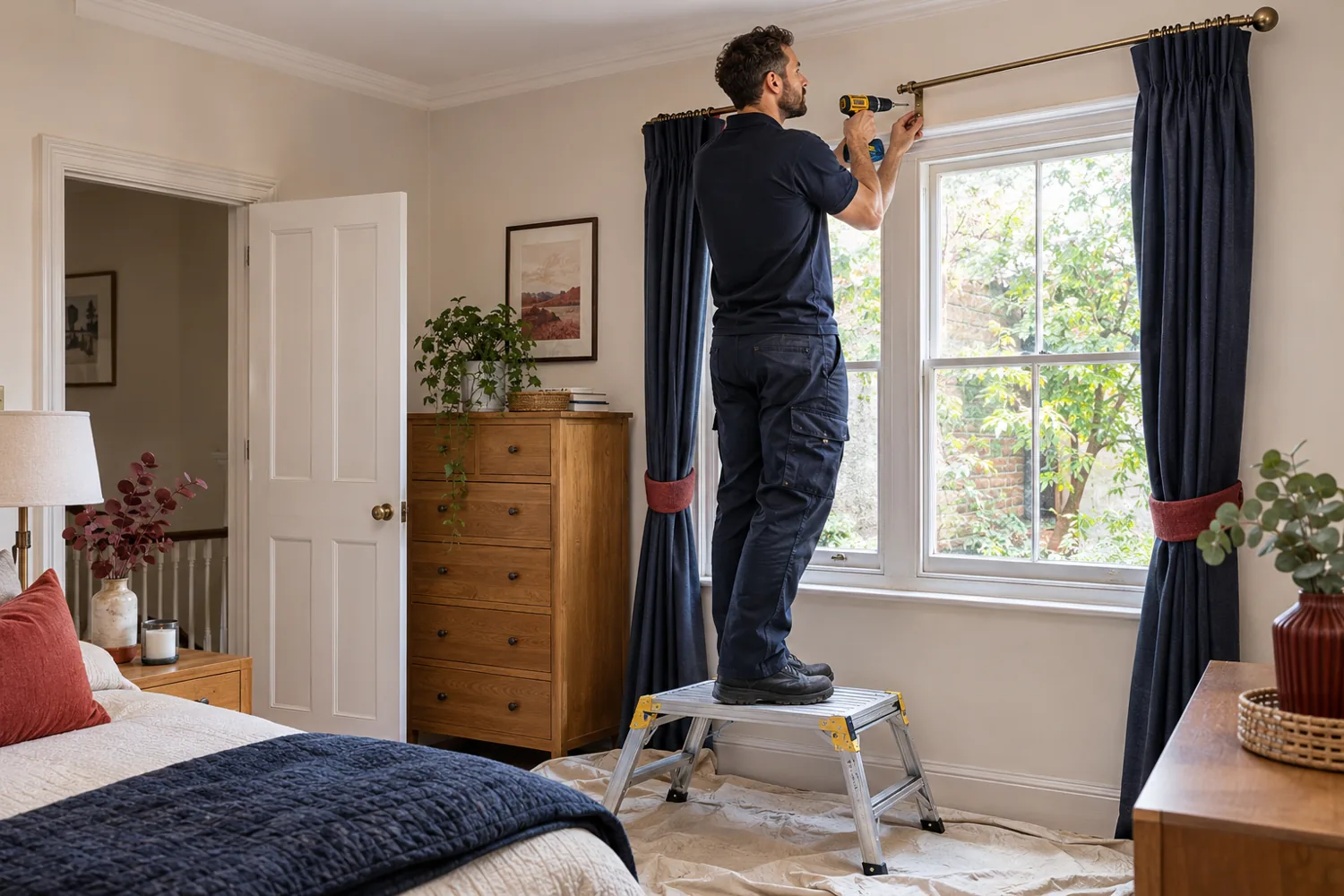
We fit suitable curtain poles, tracks and supplied blinds after checking the opening, product size and required clearances. We agree bracket locations and assess the fixing surface before drilling. The product’s safety components form part of the fitting review, and the final movement is checked before the installation is handed over.
We prepare and paint agreed walls, ceilings and suitable woodwork, discussing protection, small surface repairs and the coating system first. We allow for product drying and recoating instructions in the work plan. For landlords, agents and businesses, we can review recurring fitting and maintenance tasks, but the list still needs specific instructions. Compliance inspections and specialist systems are not presented as included in an ordinary property upkeep visit.
BEFORE THE VISIT
Decide the order before opening the paint.
We ask which tasks matter most and which rooms must remain available. We discuss the location of the products, whether boxes are already in the assembly room and where tools and protective materials can be placed. We confirm stairs, entry arrangements and any parking or unloading restriction that affects the visit.
We agree the supplied materials and identify components that may need checking after inspection. Where work involves a water interruption, an adhesive or a decorative coating, we explain how that affects use of the room. We confirm the authorised contact for rented or managed property and discuss changes to the list before attendance, rather than assuming additional jobs can be absorbed without changing the arrangements.
| Jobs reviewed together | Preparation | Materials and fittings | Visit consideration |
|---|---|---|---|
| Leak repair before repainting | Identify and repair the accessible fault first | Replacement part; later surface preparation and coating | Drying and condition are assessed before decoration |
| Furniture before final room layout | Build and position the supplied item | Complete packs; adequate assembly area; required restraint | Keep access available while panels are laid out |
| Door adjustment before paint finish | Establish the mechanical repair and any hardware change | Matching fittings; compatible preparation products | Opening and closing checked before finishing details |
| Curtain pole and shelf installation | Agree both positions and supporting surfaces | Complete brackets and suitable fixings | Can be reviewed together when products and access allow |
HOW THE WORK PROGRESSES
Work stages that fit together.
Put repair tasks before finishes
We identify work that may expose a damaged surface or needs another component. The agreed sequence avoids treating a new coating as a repair to the underlying fault.
Create the working space
We agree the room, access route and protected area needed for assembly or fitting. Furniture movement and handling are discussed as part of the instruction.
Carry out and operate
We build, fit, replace or adjust the agreed items, checking movement, positions and accessible repaired connections as appropriate to the work.
Explain when normal use can resume
We review completed tasks and identify outstanding work. Product curing, drying or operating instructions are explained rather than assuming every fitting and finish is ready for immediate use.
PROPERTY DETAILS THAT AFFECT THE WORK
Different properties, address-specific preparation
Merton’s conservation-area list identifies separate Wimbledon areas with their own maps and guidance. That does not make all Wimbledon homes listed or subject to identical controls. We ask about the particular building and proposed change where original joinery, exterior features or another sensitive element is involved.
We distinguish that property check from routine internal fitting and repair. A loose cupboard handle and replacing an original external feature are different instructions. The customer or authorised owner confirms relevant permissions before an alteration proceeds. We assess the room, supporting wall and materials at the property rather than using a postcode as a description of its age, construction or maintenance needs.
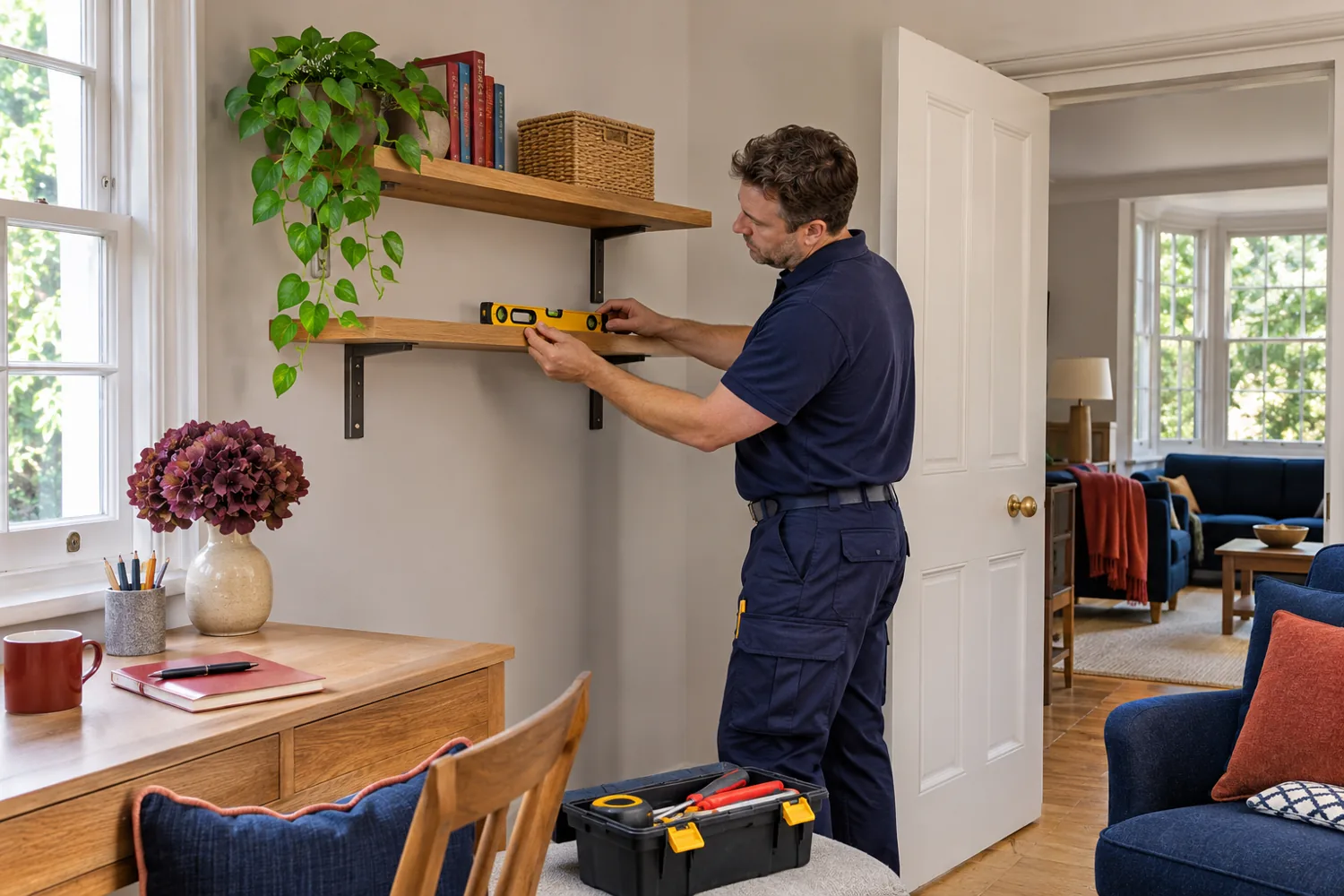
Illustrative shelf-fitting work. Images on this page show service tasks, not claimed customer projects or local premises.
More detail on the individual services
For a room update, we can discuss assembling the furniture, small fitting repairs and the decorative finish as separate tasks in the right order. Accessible plumbing repairs are assessed before any related making good.
Work at another London property?
A room sequence is planned for the actual property and the people using it. If you are arranging work at a second address, send its own products, repair list and access details. The South London coverage list shows further areas where an enquiry can be assessed.
PUBLISHED LONDON COMPARISON
Plan the labour. Confirm the actual price.
We discuss the work and our price before booking. The charging basis and any extras are confirmed for the actual property. These standard external London figures are a comparison, not our confirmed rates or a forecast of your visit length.
| Published weekday daytime charge | External comparison |
|---|---|
| First 30 minutes | £47 |
| Each further 30 minutes | £36 |
| Minimum one-hour labour total | £83 |
| 1½ hours, calculated on the same basis | £119 |
| Materials and additional costs | Materials and shopping time are extra; congestion charges excluded. |
The source states all taxes are included in its rates. This does not establish our VAT position or the extras in our quotation. Published London labour comparison, checked 4 November 2026. Source terms and availability apply.
COMPARISON CALCULATOR
First half-hour. Further half-hours.
Change the planned labour hours to see the same published charging model. The initial period is charged once. This is not an appointment duration estimate or an offer for your property.
PLANNED LABOUR TIME
1 hour
External labour comparison
£83
£47 first ½ hour + £36 further ½ hour
One-hour minimum in this comparison; further half-hour steps. Materials, shopping, congestion and other extras are outside this calculation. No area premium or separate package price is assumed.
QUESTIONS ABOUT THE ROOM PLAN
Rooms, repair stages and returning to use.
Can a bedroom still be used while a bed or wardrobe is assembled?
We agree the available work area and access before booking. Panels and components may occupy floor space, and a mattress or existing unit may need moving. We discuss which arrangements are included rather than assuming the room can remain fully usable throughout a large furniture build.
Why might a repair and repaint need separate stages?
The source of damage must be resolved and the surface suitable for preparation and coating. Filler, sealant, wet material and paint have different drying or curing requirements. We explain the sequence for the actual products rather than offering a fixed same-day finish for every repair list.
Can you prioritise a door problem before decorative jobs?
Yes. We review your priorities and assess the door type, cause of the fault and required components. We can agree that suitable functional repairs come before non-essential fittings or decoration. A specialist door or missing part may still need a different arrangement.
Does a conservation-area address prevent routine interior work?
Not automatically. The property, feature and proposed alteration need to be considered. We distinguish suitable maintenance from changes requiring relevant approval and ask about the actual address where that matters. We do not treat all Wimbledon postcodes as one conservation boundary.
Can a business combine shelving and staff furniture assembly?
We can assess the full item list, product details and working areas together. We discuss permitted hours, equipment that must remain accessible and who will check the finished work. Electrical installations, specialist commercial systems and structural supports are separate from the ordinary furniture and fitting tasks.
What do you check before closing the visit?
We review the agreed list, operate the relevant doors, drawers or window fittings and inspect suitable accessible repaired connections. We explain any missing parts or unresolved tasks and the product instructions affecting use. The handover distinguishes completed work from anything waiting for curing or a further appointment.
HANDYMAN LOCAL SERVICES / WIMBLEDON
A room plan. A checked result.
Call with the postcode, task details and relevant product information. We discuss the work, access, materials and our price before arranging the appointment.