LOCAL HANDYMAN LONDON

HANDYMAN TOOTING / REPAIRS & FITTING
Handyman Tooting.
- A separate description and photograph for each fault helps us plan the appropriate work.
- We confirm the approving customer, access contact and parts arrangements before attending.
- Personal furniture and fitting requests are kept distinct from landlord-managed systems.

MAKE YOUR
SPACE WORK.
Painting. Fitting. Fixing.
DESCRIBING THE FAULT
What details help us assess a repair request?
We ask what the fitting does, where the problem appears and whether anything has changed. A photograph of the component and its surroundings helps us distinguish a loose handle, damaged support or water fault. We review each item separately instead of assuming that a general description covers the parts and work required.
AUTHORISED WORK
Can the person providing access be different from the customer?
Yes, where the arrangements are agreed. We confirm who instructs and approves the work, who can authorise additional parts and who will let us in. A tenant can explain the fault while an owner or agent approves the repair. We establish those roles before treating access as authority to alter the property.
HANDYMAN WORK IN TOOTING
A clear report leads to a better defined repair.
We assess handyman requests in Tooting from specific faults and product details. A door that scrapes, a drawer that will not close and a tap that leaks underneath are different enquiries. We review what is happening, inspect the appropriate fitting and discuss the suitable repair rather than guessing a replacement from a broad description.
We also assemble supplied furniture and install agreed wall and window fittings. These tasks can be organised with ordinary maintenance when the work, materials and instruction allow. We distinguish personal items from landlord-owned or shared installations, and confirm which customer can authorise each change. That gives owners, tenants, agents and business contacts a clear basis for arranging the appointment.
REPAIRS AND INSTALLATIONS
Authorised tasks for the rooms and fittings in use.
BEDROOMS
Furniture supplied by the resident or owner
We assemble beds, wardrobes, drawers, desks and suitable freestanding storage from the actual product instructions. We review the model and complete quantity, identify the room position and inspect the packs before joining components. We protect the immediate working area and fit the specified hardware and supports, then set the doors or runners and check their movement.
We confirm who owns the item and whether its required restraint involves a wall that the customer is authorised to drill. Large panels, tall frames and restricted assembly space can change handling requirements. We discuss these before attendance rather than treating every flat pack as interchangeable. Missing parts or damaged joints are identified before further work, and replacement components are agreed instead of improvised to make an incomplete item appear finished.

LIVING AREAS
Wall fittings with a specific product and position
We fit suitable shelves, mirrors, pictures and television brackets after reviewing the item and the supporting wall. We need the dimensions, weight, intended load and product mounting points, along with the proposed position. We agree the placement and any relevant drilling authority rather than assuming holes from a previous fitting can be reused.
We inspect the accessible fixing area and discuss suitable anchors and supports. Television cable covers, surface making good and fixed electrical changes are different tasks, so their inclusion is discussed explicitly. Reinforcement or a new socket requires appropriate separate assessment. Once a fitting is secured, we review the installed position and relevant movement. We do not issue a structural or electrical certificate merely because a bracket has been fitted.

KITCHEN & BATHROOM
Accessible plumbing faults described accurately
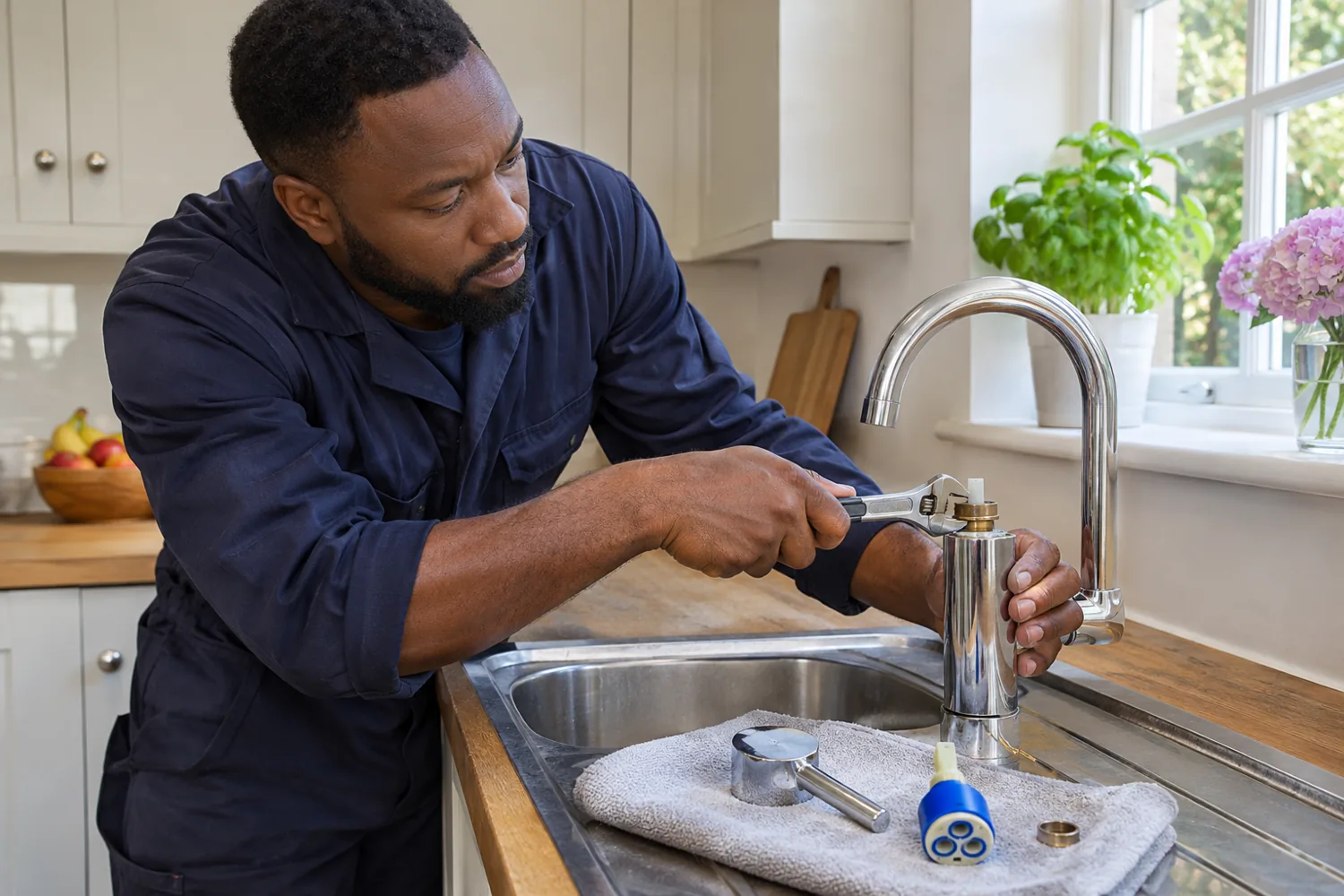
We assess suitable tap, waste and minor bathroom fitting problems by identifying where the water appears and what can be reached. We discuss the fitting, available isolation and likely compatible component before dismantling. A drip from the spout, water at the base and a leak beneath a basin can have different causes and replacement requirements.
After an agreed repair, we operate the fitting and inspect the accessible connection. We explain any related damage, outstanding part or need for a separate investigation before decorative work proceeds. Concealed pipe defects, specialist water systems and shared installations are not included by calling a fault small. Gas work and electrical appliance repairs need the relevant competence and service arrangement rather than being added to a general plumbing or handyman visit.
DOORS & STORAGE
Door and storage faults checked in normal use
We assess ordinary internal-door handles, hinges and latches as well as suitable cupboard and drawer faults. We ask whether the item catches, drops, moves loosely or fails to engage, then inspect the hardware and its fixing material. That helps distinguish adjustment from a damaged component or support that needs a different repair.
We agree suitable replacement hardware only after checking dimensions and compatibility. We explain any marks or old fixing holes that may remain and test the finished movement. Fire doors, communal access doors, external security systems and structural frame problems are separated from routine internal adjustments. A reported issue with a shared door is not accepted under a resident’s personal fitting instruction without the appropriate authorised customer and assessment.

WINDOWS & FINISHES
Window fittings and the work after a repair
We install suitable supplied curtain poles, tracks and blinds after checking the kit, support surface and clearance around the opening. We establish the bracket positions and operating travel before drilling. We fit the product-specific safety components and inspect the finished movement. Cutting or other adaptation is assessed against the manufacturer’s instructions, not assumed because a fitting is slightly too large.
We prepare and paint agreed interior walls, ceilings and woodwork where the underlying surface is suitable. We discuss filling, preparation and products after defects have been addressed. A local patch can differ from existing paint in texture or sheen, so we agree the required finish. Decoration is not used to disguise a continuing leak, unstable substrate or other fault that still needs investigation.

BEFORE THE VISIT
Describe each fitting and identify the approving contact.
We ask for a concise item-by-item report: the fitting, its location and what happens when it is used. Close photographs show the hardware; wider photographs show access and surrounding material. Product links and quantities are needed for new items. We also ask which repairs have already been authorised and whether a particular component or product must be retained.
We confirm the customer’s approval route before arranging attendance. That includes who supplies parts, any agreed spending limit, the person providing entry and the person receiving the completed work. We discuss room access, protection, moving contents and the place for packaging. Materials collection, disposal and another visit are not assumed. A newly discovered issue is referred back for approval before it becomes additional work.
| Jobs reviewed together | Preparation | Materials and fittings | Visit consideration |
|---|---|---|---|
| Tenant’s new desk | Product model, ownership and assembly room | Complete supplied kit; any required restraint | Personal furniture kept distinct from landlord repair reports |
| Internal handle fault | Observed movement, door type and fixing dimensions | Compatible hardware and sound support | Authorised repair checked by opening, closing and latching |
| Reported tap leak | Exact water location, isolation and access | Matching component or agreed replacement | Accessible connection inspected after operation |
| Shelf removal and local painting | Drilling authority, old holes and required finish | Suitable repair and coating products | Making good agreed separately from removing the fitting |
HOW THE WORK PROGRESSES
From the fault report to the completed list.
Separate the reported items
We review each fault or new product independently, noting its location and the requested result. We identify missing details, potential parts and enquiries that need a different trade before agreeing a suitable combined appointment.
Confirm who can instruct the work
We establish the customer, access contact and decision-maker for replacements or additional materials. We do not treat a resident’s description or an unlocked door as permission for every change to the property.
Inspect and carry out the agreed repair
We compare the actual fitting with the report and explain any changed findings. We perform suitable authorised work and test the relevant movement or accessible repaired connection. Changes are approved before the job extends.
Account for completed and outstanding tasks
We review the list with the receiving contact and explain any part, curing stage or specialist assessment still needed. We leave the immediate area tidy and agree how the authorised customer will receive the remaining decisions.
PROPERTY DETAILS THAT AFFECT THE WORK
The repair report and the authority to proceed
Wandsworth’s private housing repair information explains that responsibility and reporting should be checked with the landlord and tenancy arrangements. We do not decide a dispute about who must pay from a photograph. For a Tooting enquiry involving rented premises, we establish the authorised instruction and access arrangements before carrying out the agreed work.
We can discuss a resident’s own desk or shelves separately from a reported building defect. We ask whether a fault has already been logged, what the owner or agent has approved and which fitting is to be retained or replaced. Council, housing-association and private arrangements may differ; we do not present our independent appointment as the landlord’s official maintenance response or promise access to a shared system.

Illustrative shelf-fitting work. Images show service tasks, not claimed customer projects or local premises.
Related fitting and repair services
We distinguish ordinary small repairs from specialist enquiries. Read about furniture assembly, plumbing repairs and electrical services to describe the individual tasks accurately.
A nearby property with its own repair list
A report for another property needs its own instruction and access contact. The South London coverage page includes Balham, Wimbledon and Clapham; we confirm the actual address and available appointment for each request.
PUBLISHED LONDON COMPARISON
Plan the labour. Confirm the actual price.
We discuss the work and our price before booking. The charging basis and any extras are confirmed for the actual property. These standard external London figures are a comparison, not our confirmed rates or a forecast of your visit length.
| Published weekday daytime charge | External comparison |
|---|---|
| First 30 minutes | £47 |
| Each further 30 minutes | £36 |
| Minimum one-hour labour total | £83 |
| 1½ hours, calculated on the same basis | £119 |
| Materials and additional costs | Materials and shopping time are extra; congestion charges excluded. |
The source states all taxes are included in its rates. This does not establish our VAT position or the extras in our quotation. Published London labour comparison, checked 4 November 2026. Source terms and availability apply.
COMPARISON CALCULATOR
First half-hour. Further half-hours.
Change the planned labour hours to see the same published charging model. The initial period is charged once. This is not an appointment duration estimate or an offer for your property.
PLANNED LABOUR TIME
1 hour
External labour comparison
£83
£47 first ½ hour + £36 further ½ hour
One-hour minimum in this comparison; further half-hour steps. Materials, shopping, congestion and other extras are outside this calculation. No area premium or separate package price is assumed.
QUESTIONS ABOUT THE ROOM PLAN
Repair reporting and approval questions.
Is sending a photograph enough to authorise the repair?
A photograph helps us review the fault, but we also need an agreed instruction and the appropriate approving customer. That matters where a tenant, owner, agent or manager has a different role. We confirm what is authorised and how materials or changed findings will be approved before carrying out the work. We do not infer permission from a picture alone.
Can the landlord approve parts while the tenant stays at home?
We can arrange that division of responsibilities when it is clear before the visit. We need a contact who can make decisions, the agreed task list and any material arrangements. The resident can show us the problem and provide access. If inspection changes the proposed repair, we discuss it with the authorised decision-maker rather than assuming approval.
What should a report about a stiff drawer include?
We ask which drawer is affected, whether it catches, runs unevenly or has loose hardware, and whether the problem is constant. Photographs of the runner and cabinet help us review the enquiry. We still inspect the fitting before choosing an adjustment or replacement, because a similar symptom can come from the drawer, runner, attachment or cabinet panel.
Can you complete the items that are already approved if another is uncertain?
We discuss which suitable tasks can proceed independently and which are connected. For example, a furniture assembly may be separate from a reported shared-system fault, while painting may depend on an earlier repair. We confirm priorities and any change to attendance or price. Uncertain work is not silently added just because other repairs have been authorised.
Will you contact the council or housing association for me?
We establish the instruction with the customer arranging our service; we do not present an independent visit as an official landlord repair route. Where a managed fitting needs the landlord’s maintenance team or approval, we explain that distinction. We agree the authorised work and contact arrangements rather than promising to resolve a housing responsibility dispute on the customer’s behalf.
Does your completed list replace a safety inspection?
No. We review the ordinary repairs and fittings agreed for the visit, demonstrating movement or accessible connections as appropriate. Statutory electrical, gas, fire-safety and other specialist inspections have their own requirements and competent trades. We identify work that needs another service and do not label a general handyman handover as a compliance certificate.
HANDYMAN LOCAL SERVICES / TOOTING
Send the faults as a clear item list.
Tell us the Tooting postcode, what each fitting does and who can approve the work. Include new product details and any landlord or agent instruction already agreed.