LOCAL HANDYMAN LONDON

HANDYMAN MARYLEBONE / REPAIRS & FITTING
Handyman Marylebone.
- We work from specific defects rather than a general instruction to refresh the property.
- Existing handles, brackets, finishes and furniture are checked before changes are agreed.
- Tenants, owners and agents can have separate access and approval roles.
MAKE YOUR
SPACE WORK.
Painting. Fitting. Fixing.
AN AGREED DEFECT LIST
Can we work from an agent’s maintenance or inventory notes?
We can review the identified tasks, photographs and intended repair with the authorised contact. We establish what the note means in practice, such as a loose handle rather than a request to replace the door. We do not treat an inventory description as permission for every alteration or as a decision about tenant liability.
RETAINING WHAT IS THERE
Can we keep the existing fittings and finishes?
We assess their condition and whether a suitable repair or compatible component is available. We discuss exposed holes, marks or a possible paint difference before changing hardware. The agreed result may be an adjustment, a replacement part or separately specified decoration; we do not assume a complete-room refurbishment is wanted.
HANDYMAN WORK IN MARYLEBONE
A precise defect list. A controlled repair.
We carry out Marylebone handyman work from a clear list of defects and fitting tasks. A property note may mention a cupboard that catches, a loose door handle, a dripping tap or furniture still needing assembly. We inspect the relevant component and agree the intended result before replacing items that the owner wishes to retain.
We work with residents, landlords, letting agents and commercial contacts, establishing who approves the task and who provides access. We assemble furniture, mount suitable televisions and shelves, fit window hardware, repair ordinary fittings and prepare agreed decorative areas. Existing condition and visible finishing are discussed as part of the work, without turning a maintenance instruction into an unrequested alteration.
BEFORE THE VISIT
Agree the parts and the retained finish.
We ask for the defect list, photographs and a contact who can clarify ambiguous notes. Product details and measurements help identify matching hinges, handles, tap parts and brackets. We establish what is to be repaired, what may be replaced and what should remain untouched. Where an agent arranges the work, we confirm the owner-authorised materials and the approval route for anything discovered during inspection.
We agree keys or entry arrangements and identify who will receive the completed work. Existing furniture, possessions and decorative surfaces are considered when planning the work area and protection. We discuss collecting parts, handling furniture, gathering packaging and any disposal request separately. A broader finding is brought back to the authorised contact rather than added automatically because it appears on the same room photograph.
| Jobs reviewed together | Preparation | Materials and fittings | Visit consideration |
|---|---|---|---|
| Loose cupboard door | Hinge, mounting plate and cabinet condition | Compatible adjustment or matching replacement | Retained finish and old marks considered |
| Furniture awaiting assembly | Full product and condition of supplied packs | Specified hardware and required restraint | Damage or missing components raised before concealment |
| Handle and latch defect | Door type, dimensions and actual operation | Matching fittings; agreed filling if needed | Repair instruction does not imply complete door replacement |
| Old wall fitting and paint | Existing anchors, surface and desired new position | Suitable fixings and specified coating | Local making good distinguished from a whole-wall finish |
REPAIRS AND INSTALLATIONS
Maintenance without unnecessary alteration.
Kitchen defects assessed at the component
We inspect cupboard hinges, handles and drawer fittings to establish why they are not operating correctly. A mounting screw that has loosened is different from a damaged cabinet panel or worn proprietary hinge. We discuss adjustment or matching replacement hardware before removing components, checking the dimensions and any visible marks that would remain. The repair is then tested by opening and closing the affected fitting.
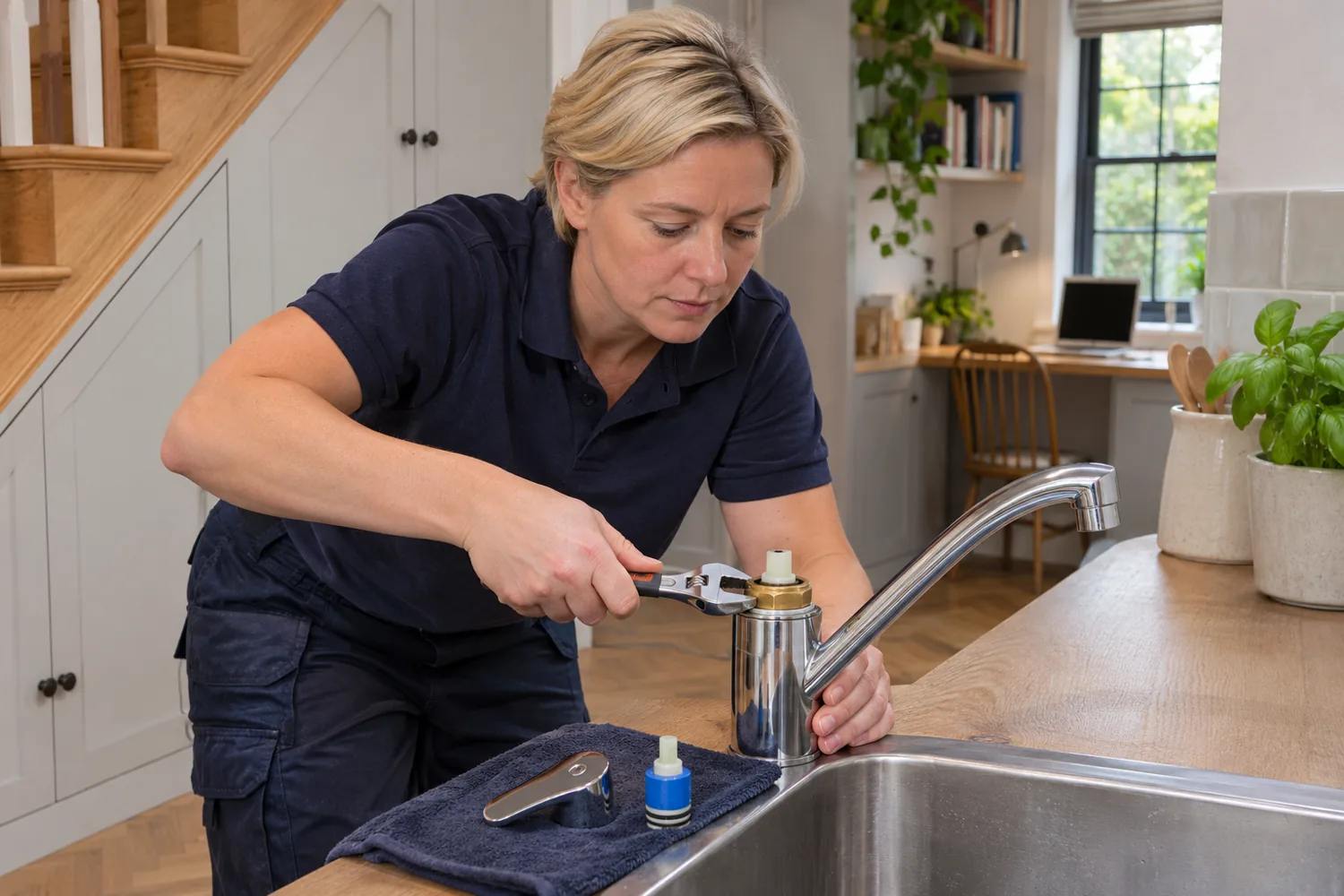
We also assess suitable tap, accessible connection and minor cistern faults. We identify the fitting, discuss water isolation and agree compatible parts before dismantling. A note describing a leak does not identify its source, so accessible joints are reviewed rather than covered with sealant. After the agreed work, we operate the fitting and inspect repaired connections. Concealed leaks and specialist systems are separately assessed.
Furniture assembled without losing sight of its condition
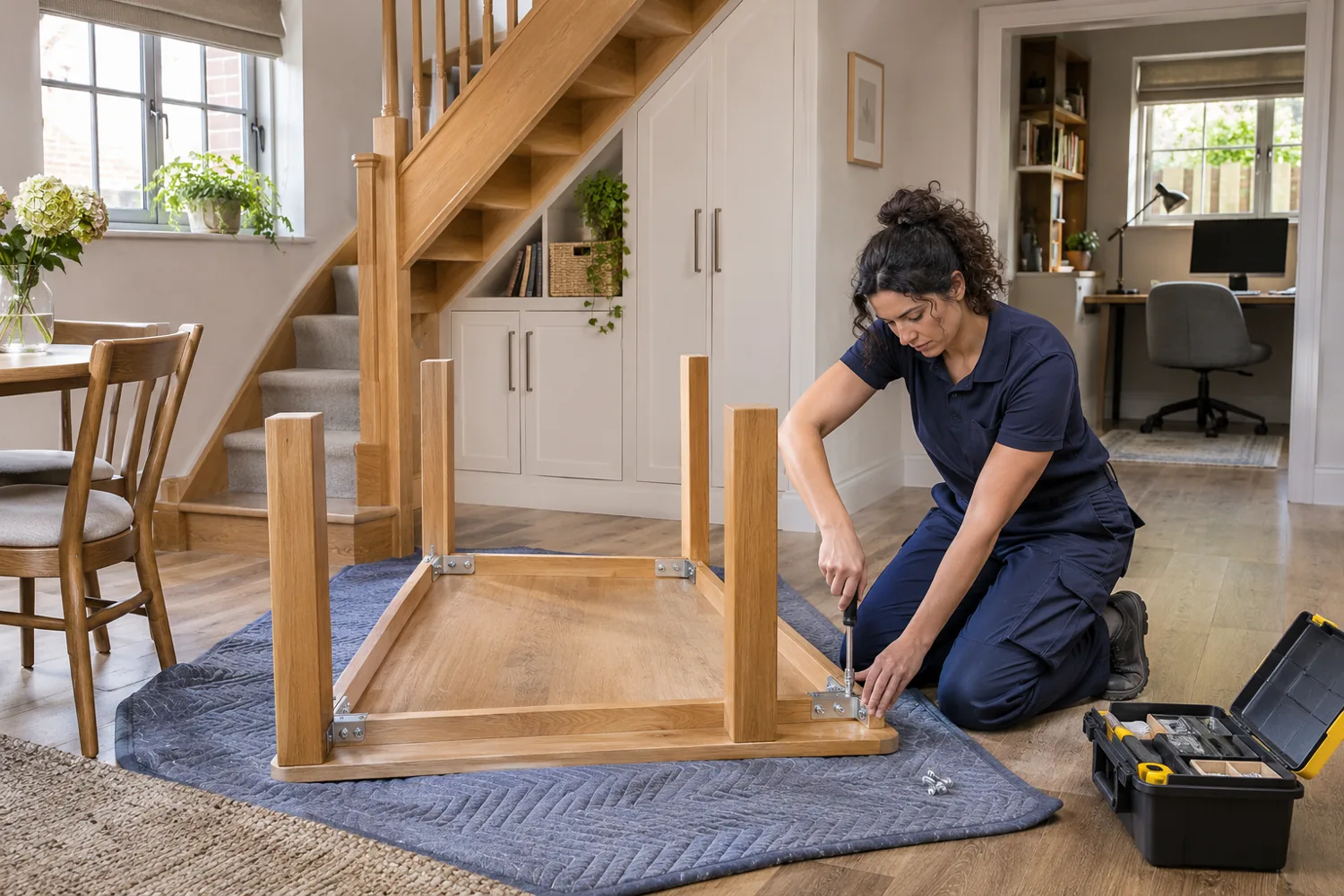
We assemble supplied beds, wardrobes, tables, desks and storage from the manufacturer’s instructions. We check the packs, visible panels and hardware before building the frame, noting missing or damaged components before they are concealed. We agree the assembly area and protect the immediate surfaces. Supports, backing, hinges and runners are fitted and adjusted so the completed item can be checked in normal use.
When existing furniture needs attention, we review its joints and fittings rather than assume dismantling is the answer. Damaged panel edges or worn connections can affect whether a unit can be rebuilt or repaired. We discuss any required wall restraint with the supporting surface and authority to drill. Carrying boxes, moving old furniture and taking packaging away are separate arrangements unless explicitly included in the visit.
Wall fittings with the previous installation considered
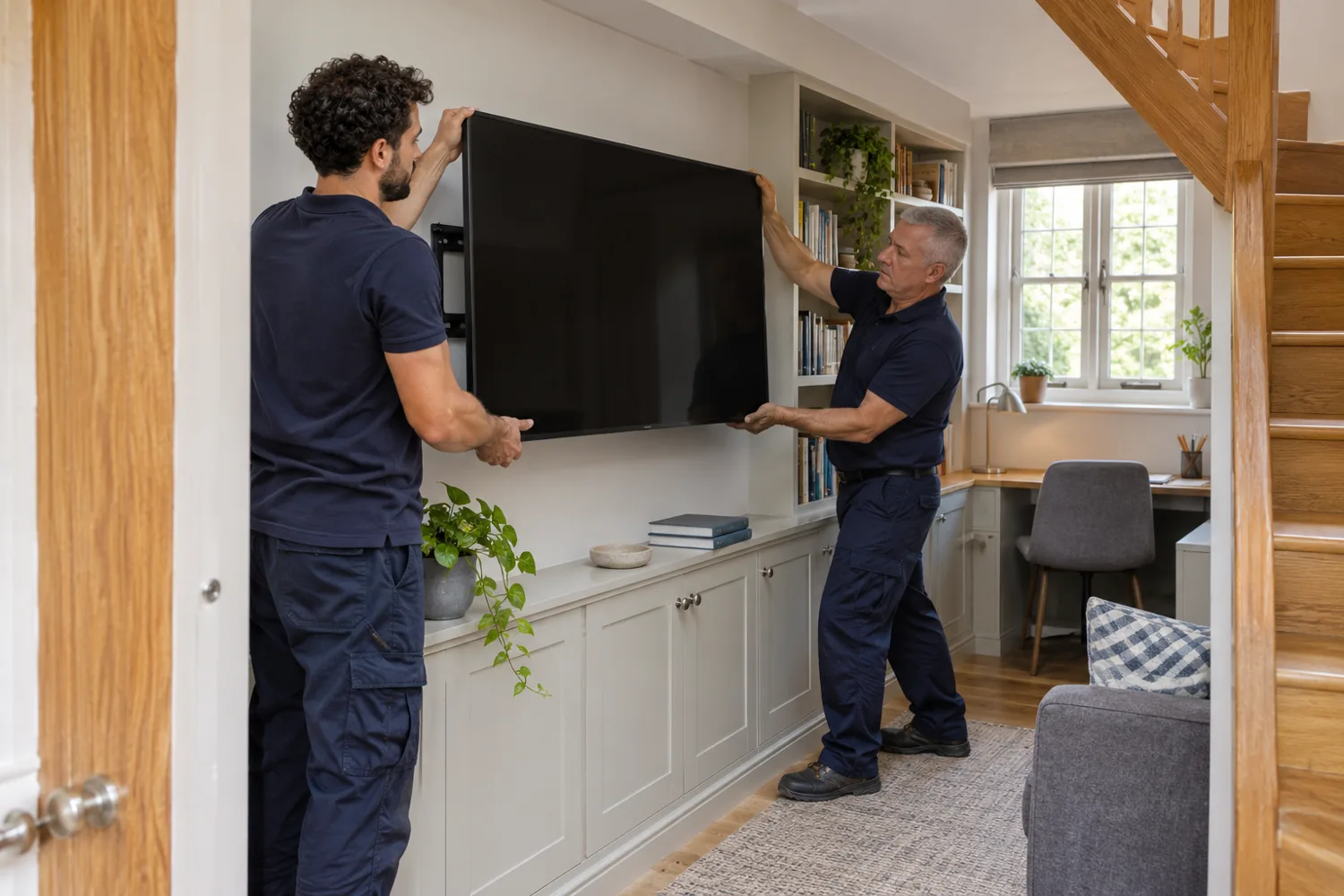
We assess suitable television brackets, shelving and other agreed wall accessories using their weight, mounting method and supporting wall. We inspect existing holes, anchors and visible damage before agreeing reuse or another position. A previous shelf does not establish the loading capacity for a replacement item. We discuss suitable additional fixings and the intended appearance before drilling or lifting the product into place.
For televisions, we agree the viewing position, bracket movement and cable finish. A new socket or other fixed electrical change is separate from mounting the screen. If old brackets are removed, we identify the making good requested rather than assume the repair includes repainting the entire wall. We check the finished position with the receiving contact and explain any further material or specialist requirement.
Doors repaired with replacement limits made clear
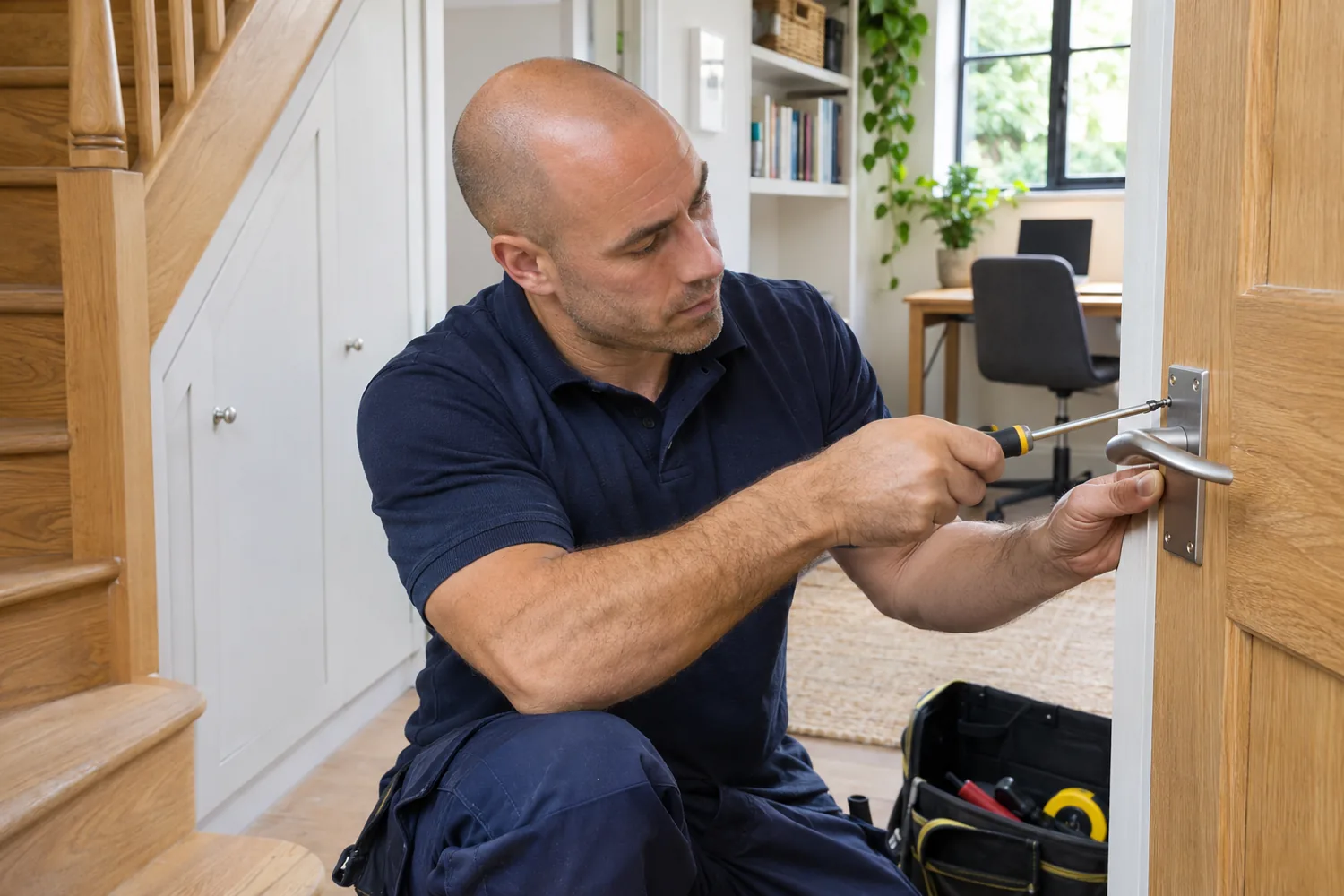
We inspect suitable internal-door hinges, handles, latches and frames to identify the reason for poor movement or closing. We distinguish a loose fitting from damaged material and compare replacement dimensions before changing hardware. A request to repair a handle does not automatically authorise cutting the door, changing its latch arrangement or replacing a visible finish that the owner intends to keep.
We also assess cupboard-door alignment and appropriate drawer runners where included. We operate each agreed fitting after the repair and review the visible result. Fire doors, specialist locks, external security fittings and structural movement need separate assessment and competence. Where new hardware exposes old screw holes or coating differences, we discuss the filling or decoration required before presenting the work as a complete finish.
Window fittings and selected decorative repairs
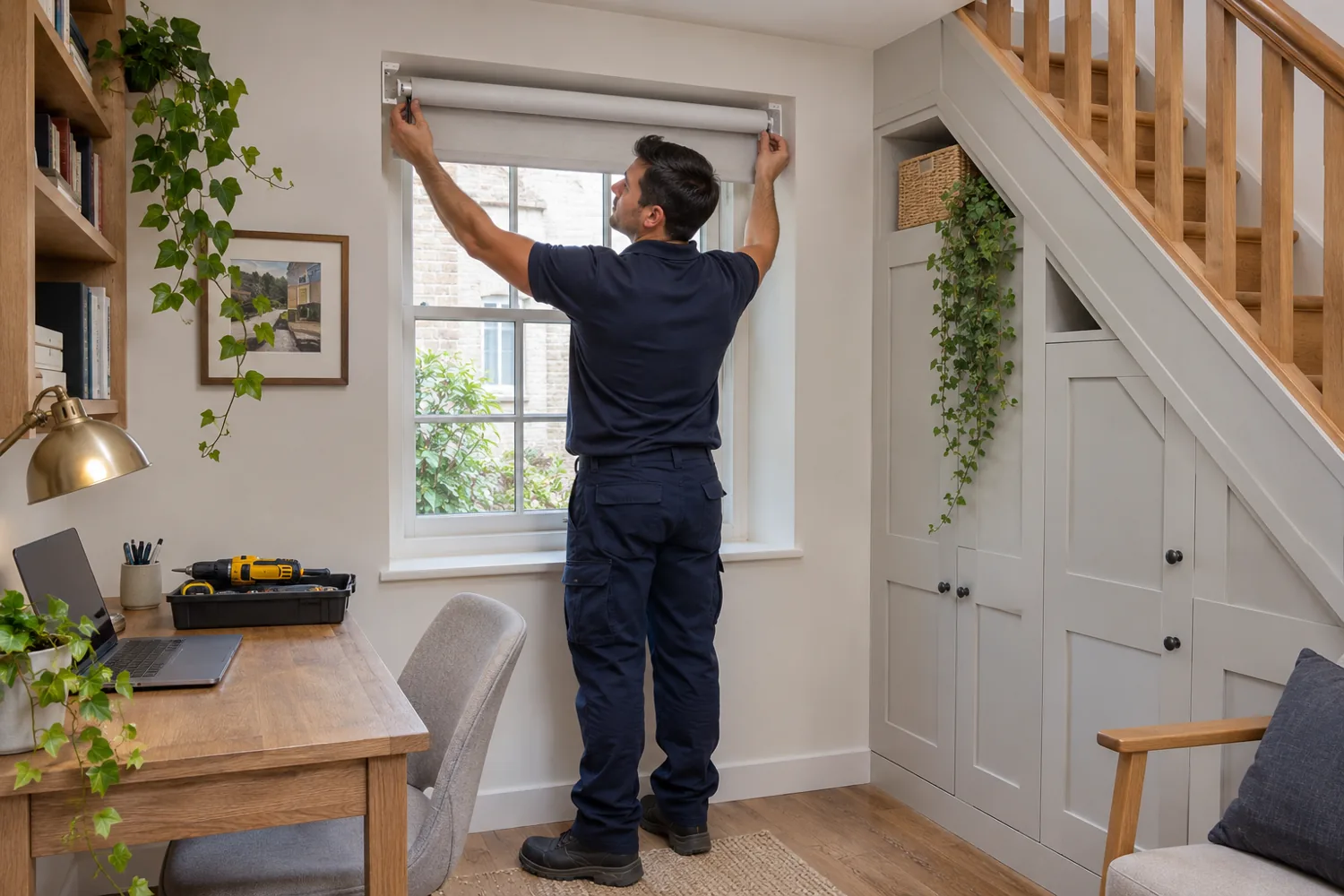
We fit suitable supplied blinds, poles and curtain tracks after checking the complete product, bracket positions and operating clearances. We inspect the supporting surface and agree whether an existing position can be reused. Required safety components are reviewed before installation. An incomplete fitting or incorrect product size is explained rather than altered without establishing a suitable method and authorised instruction.
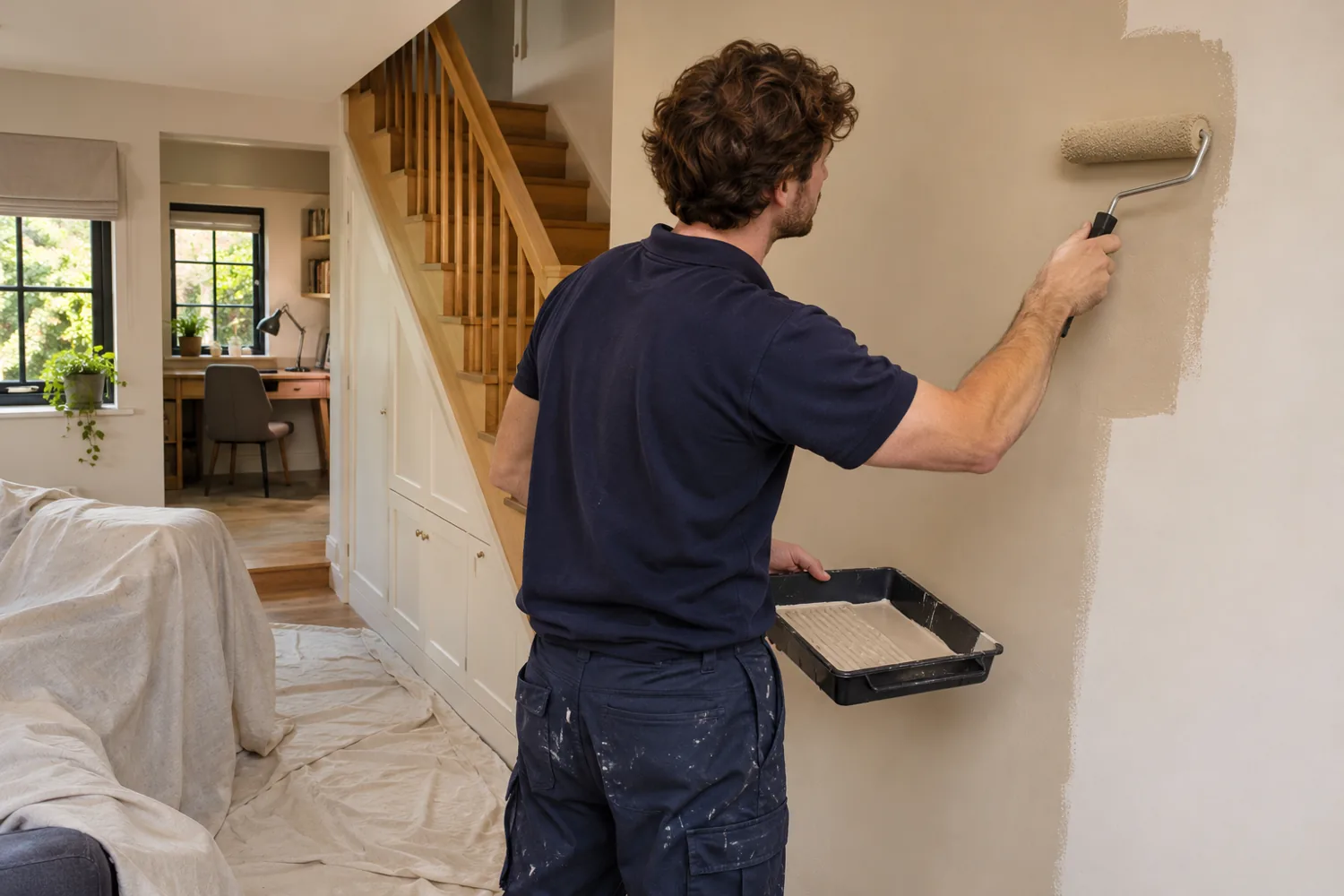
We prepare and paint agreed walls, ceilings and appropriate woodwork where the substrate is suitable. We discuss the actual area to be finished and the availability of matching products. Older paint, differing sheen or exposed repairs may prevent a local patch from blending invisibly. We distinguish the agreed decorative work from unresolved damp, failed material or a specialist finish, and plan preparation and drying before normal use resumes.
HOW THE WORK PROGRESSES
Check each item against its instruction.
Clarify each defect
We turn the reported note into a specific task, checking the item and its operation. We distinguish the fault from surrounding cosmetic marks and establish what result has actually been authorised.
Agree what will remain
We review retained hardware, finishes and product parts before a replacement is chosen. Compatible components and any visible making good are discussed with the responsible customer.
Repair and operate
We carry out suitable adjustments, assembly or installation, then check relevant moving fittings and accessible repaired connections. Extra work or changed parts require a clear instruction before proceeding.
Close the maintenance list
We review completed items with the receiving contact and identify unresolved faults, missing parts or further decorative stages. The handover describes the work undertaken without making a decision about inventory liability.
PUBLISHED LONDON COMPARISON
Plan the labour. Confirm the actual price.
We discuss the work and our price before booking. The charging basis and any extras are confirmed for the actual property. These standard external London figures are a comparison, not our confirmed rates or a forecast of your visit length.
| Published weekday daytime charge | External comparison |
|---|---|
| First 30 minutes | £47 |
| Each further 30 minutes | £36 |
| Minimum one-hour labour total | £83 |
| 1½ hours, calculated on the same basis | £119 |
| Materials and additional costs | Materials and shopping time are extra; congestion charges excluded. |
The source states all taxes are included in its rates. This does not establish our VAT position or the extras in our quotation. Published London labour comparison, checked 4 November 2026. Source terms and availability apply.
COMPARISON CALCULATOR
First half-hour. Further half-hours.
Change the planned labour hours to see the same published charging model. The initial period is charged once. This is not an appointment duration estimate or an offer for your property.
PLANNED LABOUR TIME
1 hour
External labour comparison
£83
£47 first ½ hour + £36 further ½ hour
One-hour minimum in this comparison; further half-hour steps. Materials, shopping, congestion and other extras are outside this calculation. No area premium or separate package price is assumed.
PROPERTY DETAILS THAT AFFECT THE WORK
A repair instruction is separate from liability
Westminster’s council-tenant guidance lists responsibilities for items including kitchen and bathroom cabinets, with separate treatment of fire doors. We establish whether the Marylebone property falls under those arrangements or another tenancy or lease. We do not transfer that list to every private rental or use it to decide who should bear a particular cost.
Our concern is the authorised repair: which item is faulty, what is to be retained and what result the customer is asking us to deliver. A resident’s report and an agent’s approval can form different parts of that instruction. We clarify those roles, confirm relevant permissions and discuss additional work before it is undertaken. Decisions about an inventory dispute or deposit deduction are outside the handyman task.
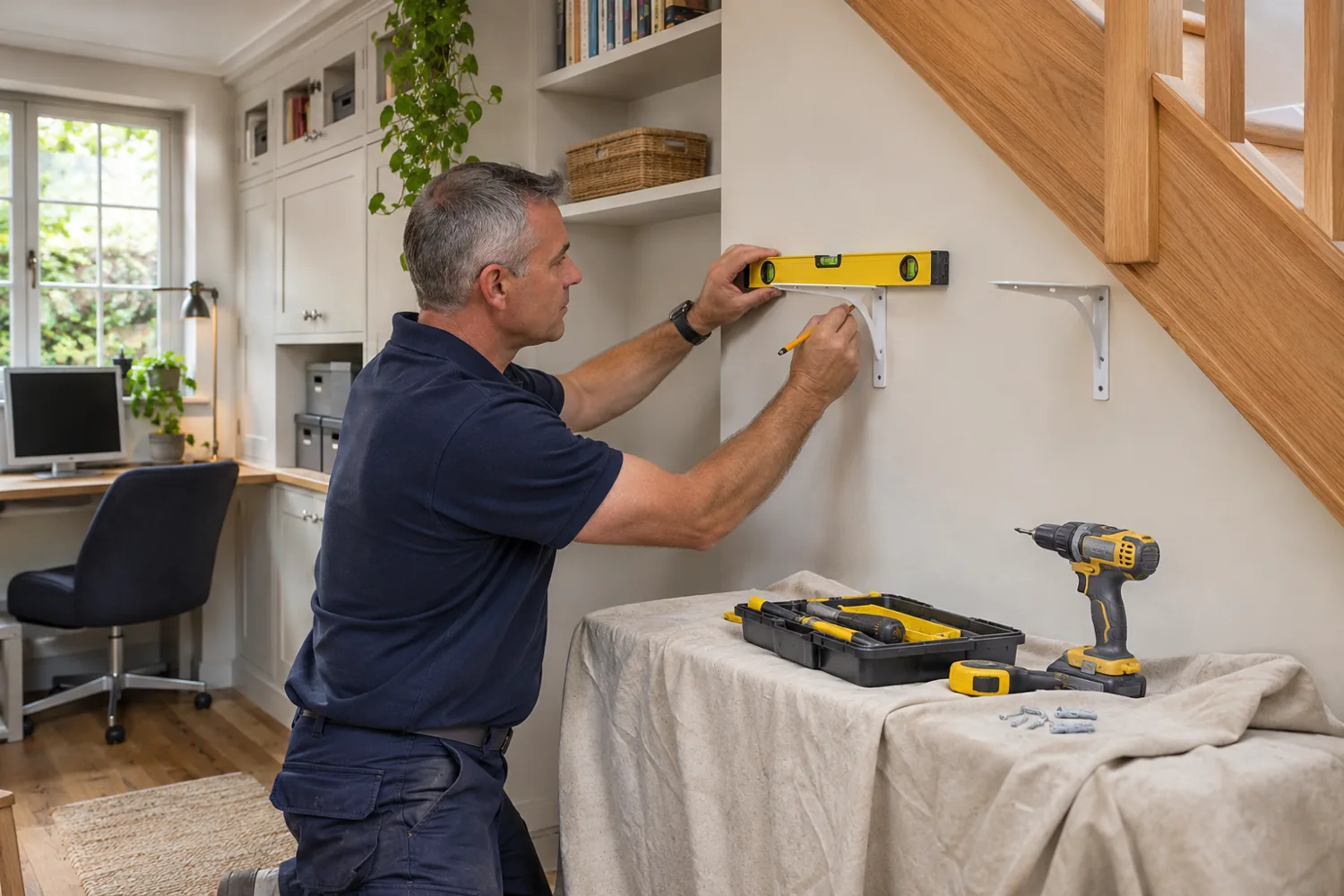
Illustrative shelf-fitting work. Images show service tasks, not claimed customer projects or local premises.
QUESTIONS ABOUT YOUR VISIT
Questions about agent-managed repairs.
Does an inventory note authorise replacement automatically?
No. We clarify the reported problem and the intended repair with the authorised customer. A loose handle, damaged component and cosmetic mark can require different instructions. We do not replace a complete item simply because it appears in a maintenance note, nor decide whether the issue should be charged to a tenant.
Can the tenant provide access while the agent approves the work?
We can agree that arrangement before booking. We need a practical contact route for the person authorised to approve materials and additional work. The resident can show us the fault and receive a demonstration, but access alone does not transfer the agent’s or owner’s decision-making responsibility to them.
Can you leave a similar-looking handle in place temporarily?
We assess suitability before fitting any substitute. Fixing centres, spindle and latch arrangements matter as well as appearance. We explain whether a temporary component is appropriate and obtain approval for the change. We do not install an unidentified fitting merely to make the maintenance list appear complete.
Will a repair restore an older paint finish exactly?
We cannot assume an invisible match. The product, age, sheen and surface preparation affect the result. We review available paint and the agreed area, then discuss a local making good or wider repaint. The work instruction identifies the finish requested rather than promise that new coating will disappear into old decoration.
Can you remove the old fitting after replacing it?
We agree what happens to removed parts, packaging and any old furniture before attendance. Gathering material into a suitable place is different from carrying it elsewhere or taking it off site. Where an owner wants a component retained for identification or review, that is included in the handover arrangements.
What do you report when the listed repair cannot proceed?
We explain the reason, such as incompatible hardware, missing parts, damaged supporting material or specialist requirements. We distinguish any independent work completed from the unresolved item and identify the further decision needed. We do not record the entire list as finished when one fitting still awaits an authorised solution.
Related fitting and repair services
The relevant work can include small fitting repairs, furniture assembly, minor plumbing and decorating. Product-specific enquiries for TV mounting and curtains or blinds are reviewed alongside the list.
A nearby property with its own repair list
Our coverage overview includes Mayfair, Fitzrovia and Bloomsbury. An agent arranging work at several addresses can send a separate defect list and authorised contact for each property.
HANDYMAN LOCAL SERVICES / MARYLEBONE
Send the defect, not just the room name.
Share the Marylebone postcode, photographs and authorised task list. We will discuss retained fittings, compatible parts and the handover before arranging the visit.