LOCAL HANDYMAN LONDON

HANDYMAN LEYTONSTONE / REPAIRS & FITTING
Handyman Leytonstone.
- Old fittings removed with the wall condition and final finish considered.
- New brackets assessed independently of the holes left by the previous item.
- Repairs, assembly and decoration sequenced so completed surfaces are protected.
MAKE YOUR
SPACE WORK.
Painting. Fitting. Fixing.
REMOVAL AND REPAIR
Can we replace an old bracket and make good?
We can review removal, suitable hole repairs and the new installation together. In Leytonstone we check the old fixing, wall condition and requested finish before agreeing the work. Existing holes are not automatically suitable for a different bracket, and paint matching or drying may require more than a single stage.
THE FINISHED SURFACE
What does making good include?
We agree whether the job is filling fixing holes, preparing a patch or decorating a larger surface. Those results need different materials and drying time. We identify loose plaster, damaged board or unresolved moisture before covering it, and explain when the condition of the wall calls for a separate repair.
HANDYMAN WORK IN LEYTONSTONE
Remove the fitting. Account for the surface.
We undertake handyman repairs and installations in Leytonstone where the job often begins with an existing fitting. A shelf may need moving, a television bracket replacing or a curtain track removing before decoration. We consider both what is coming off and what will remain visible afterwards. That means agreeing the condition of the wall, the proposed new position and the finish before removing the old item, rather than treating the remaining holes as an afterthought.
We can combine suitable wall work with furniture assembly, door adjustments, minor plumbing and general property maintenance. The appointment is built around the actual sequence: inspect, remove where authorised, repair, allow the necessary drying and fit or decorate as agreed. We establish the customer and approving contact for homeowners, tenants, landlords, agents and business premises. Permission to remove an old fitting is distinguished from permission to drill elsewhere or change retained surfaces.
BEFORE THE VISIT
Old holes, new positions and an agreed finish.
We ask for photographs that show the old item, its fixings and the surrounding surface. For a replacement, the new product reference and dimensions are equally important. We discuss whether the previous fitting must be retained, whether its position can change and what finish is expected after removal. That information lets us separate removal, substrate repair, new fitting and decoration into tasks with clear outcomes rather than one vague instruction to replace and tidy up.
Materials are agreed against those stages. Brackets and fixings depend on the new product and wall, while filler, primer and paint depend on the exposed surface and requested finish. We confirm who supplies each item and any collection needed. We also agree access, protection and who approves a change if removal exposes more damage than was visible. The appointment sequence allows for preparation and drying; the labour comparison does not override the time a material needs before the next stage.
| Jobs reviewed together | Preparation | Materials and fittings | Visit consideration |
|---|---|---|---|
| Old TV bracket to new mount | Show both bracket models and old holes | New bracket; wall-specific anchors | Assess support independently of old pattern |
| Removed shelf and paint repair | Agree extent of visible finish | Suitable filler, primer and named paint | Dry and sand before coating |
| Curtain track replacement | Confirm retained components and projection | Complete track kit and compatible brackets | Check exposed marks after removal |
| Door fitting beside fresh paint | Identify fault before decorating | Compatible hinge or latch hardware | Adjust before final surface coat |
REPAIRS AND INSTALLATIONS
Replacement fittings and the repairs around them.
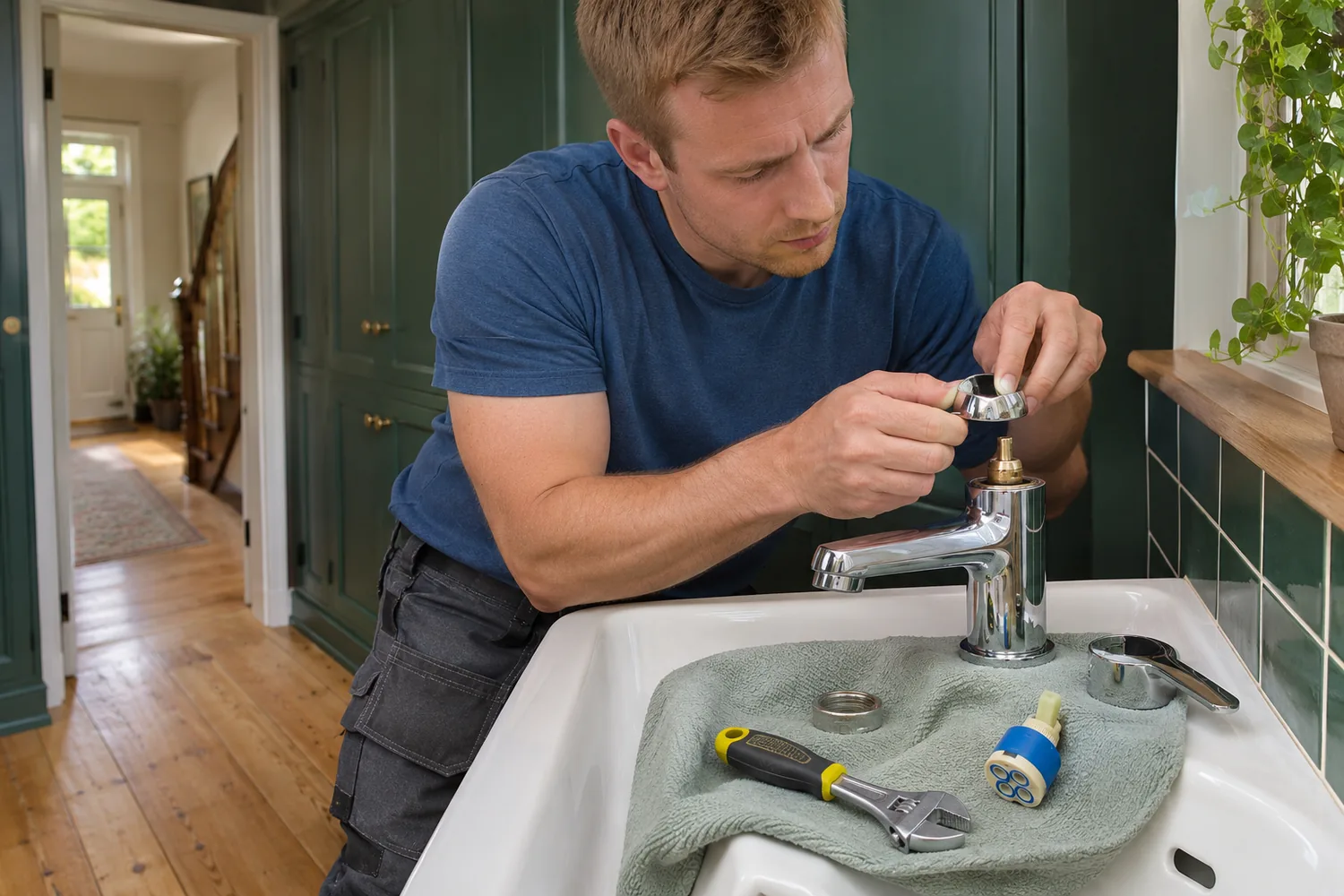
Kitchen fixings and small plumbing before decoration
We inspect loose cupboard fittings and accessible tap faults before related surface finishing. A hinge pulled from damaged board needs a different repair from a sound hinge that has drifted out of alignment. We check the plate, screws and surrounding panel before agreeing adjustment or a compatible replacement. When an old fitting leaves visible marks, we discuss the resulting appearance rather than cover them with an unsuitable larger component.
We ask where a tap leak appears, identify the fitting and confirm safe isolation before dismantling an accessible component. A cartridge or washer is matched to the actual product. We protect nearby finishes and check operation and visible joints after the agreed repair. Water-affected decoration is considered afterwards, including necessary drying. Concealed leaks, gas work and system faults are separate enquiries; filling or painting is not offered as a way to conceal an unresolved cause.
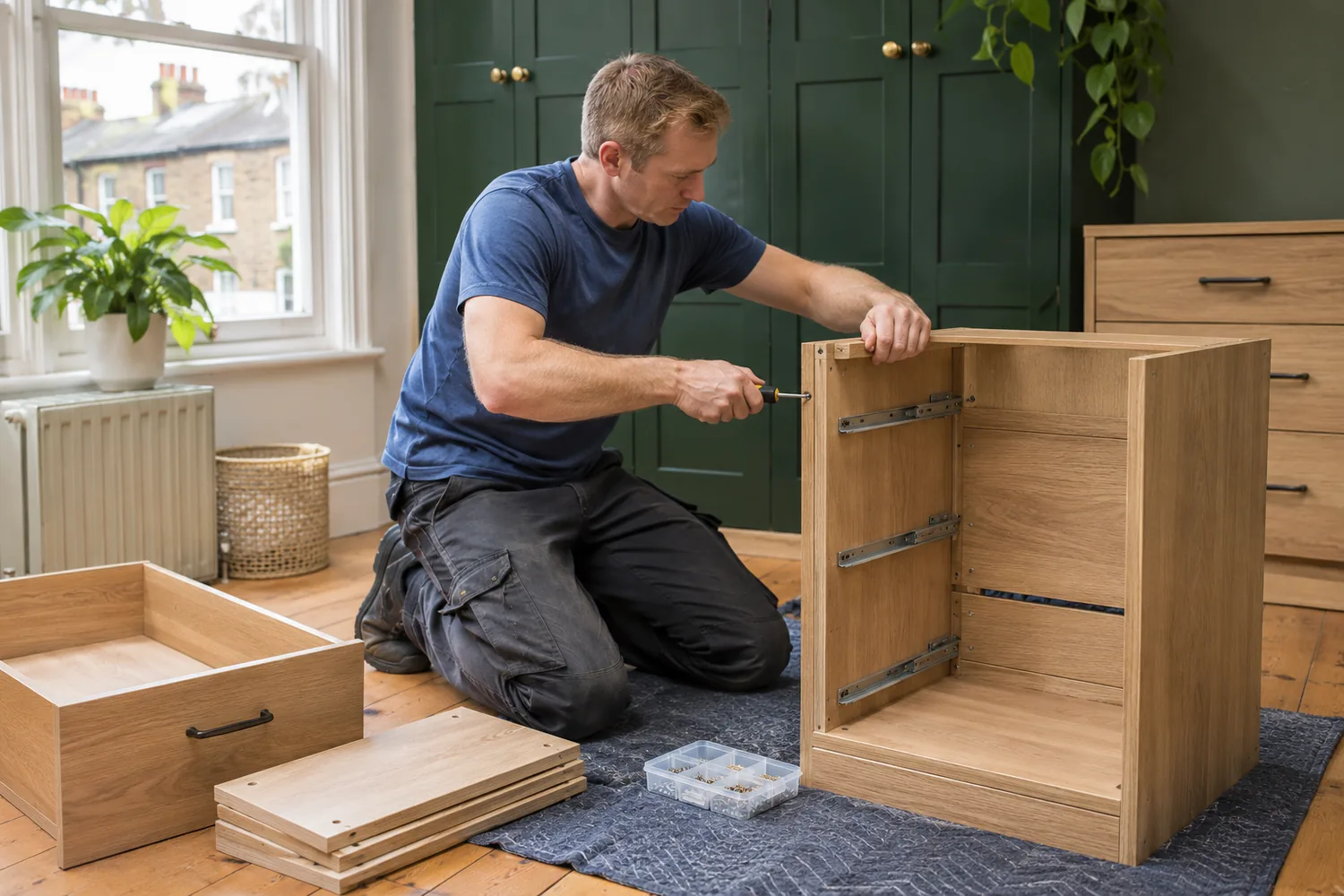
Assembly before the room is returned to use
We assemble suitable beds, desks and storage furniture using the manufacturer’s component list and instructions. We discuss where the item will stand and whether nearby walls are being repaired or painted. This helps us avoid trapping a surface that still needs preparation behind a completed wardrobe. Panels are handled on a protected area and fixings are kept organised so similar-looking components from separate boxes are not mixed.
We align doors and drawers after the main structure is assembled and check the agreed position against skirting and adjacent fittings. Product-specified wall restraints are assessed with the substrate and fresh surface condition in mind. If a repaired area is not yet ready to take the required fixing, we explain the dependency rather than load it prematurely. Missing or damaged product components are reported before substitutions are made, and any further stage is agreed with the customer.
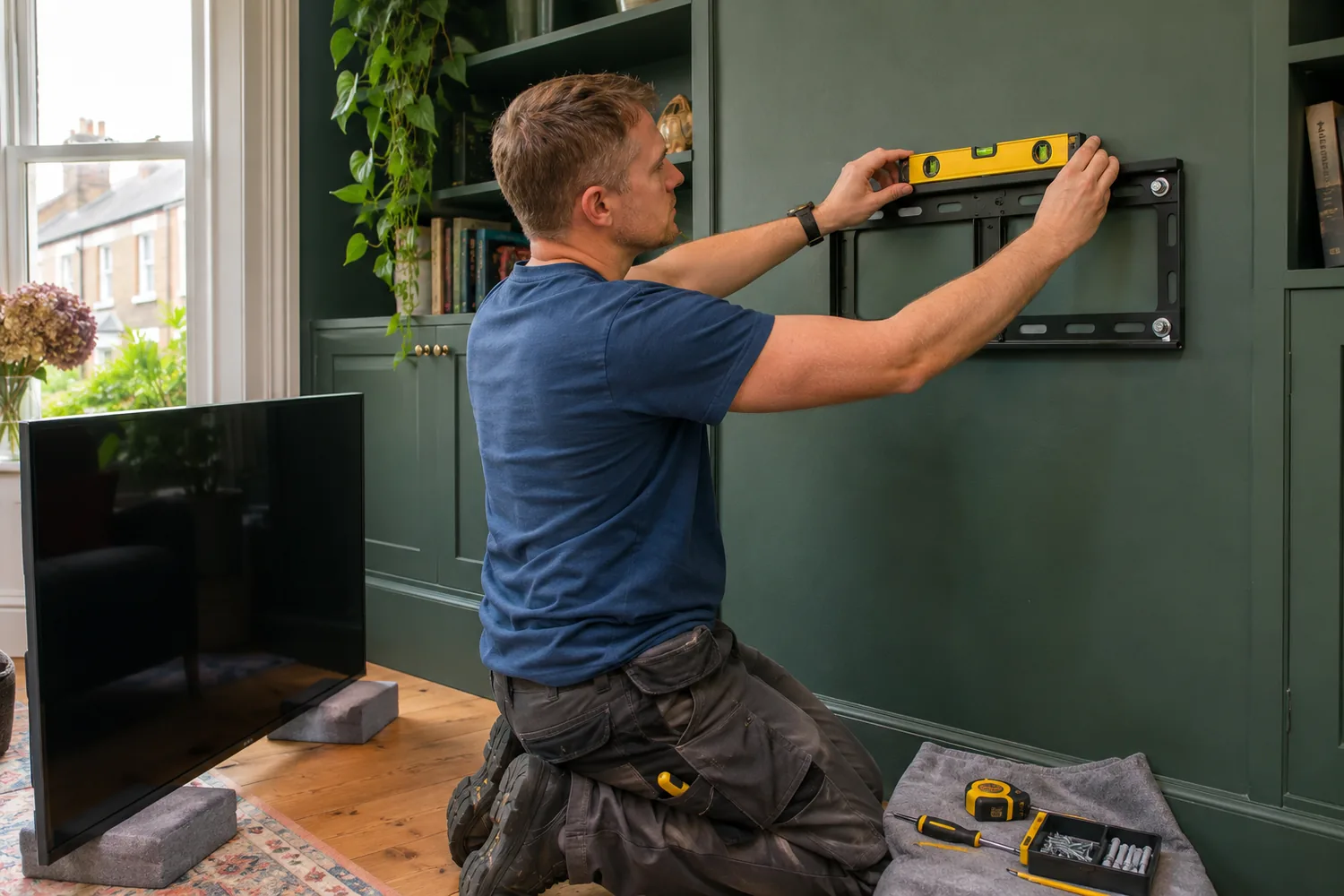
New shelves and television mounts after removal
We review the replacement shelf or television bracket independently of the fitting being removed. Different hole patterns, projections and loads can require a new position or fixing method. We inspect the wall, the condition of old holes and the remaining substrate before agreeing reuse. A wider bracket does not itself make a damaged fixing point sound. We mark the new position only after the support and requested height have been checked.
For a television, the screen’s mounting pattern and bracket specifications are checked together. We consider arm movement, screen clearance and accessible cables. For shelving, we agree span, depth and intended use so the brackets and support match the task. Concealed wiring and fixed electrical changes remain separate. We check the completed position and explain any agreed making good around exposed old holes rather than leave the customer to discover that the new item does not cover them.
Door repairs with the surrounding paint protected
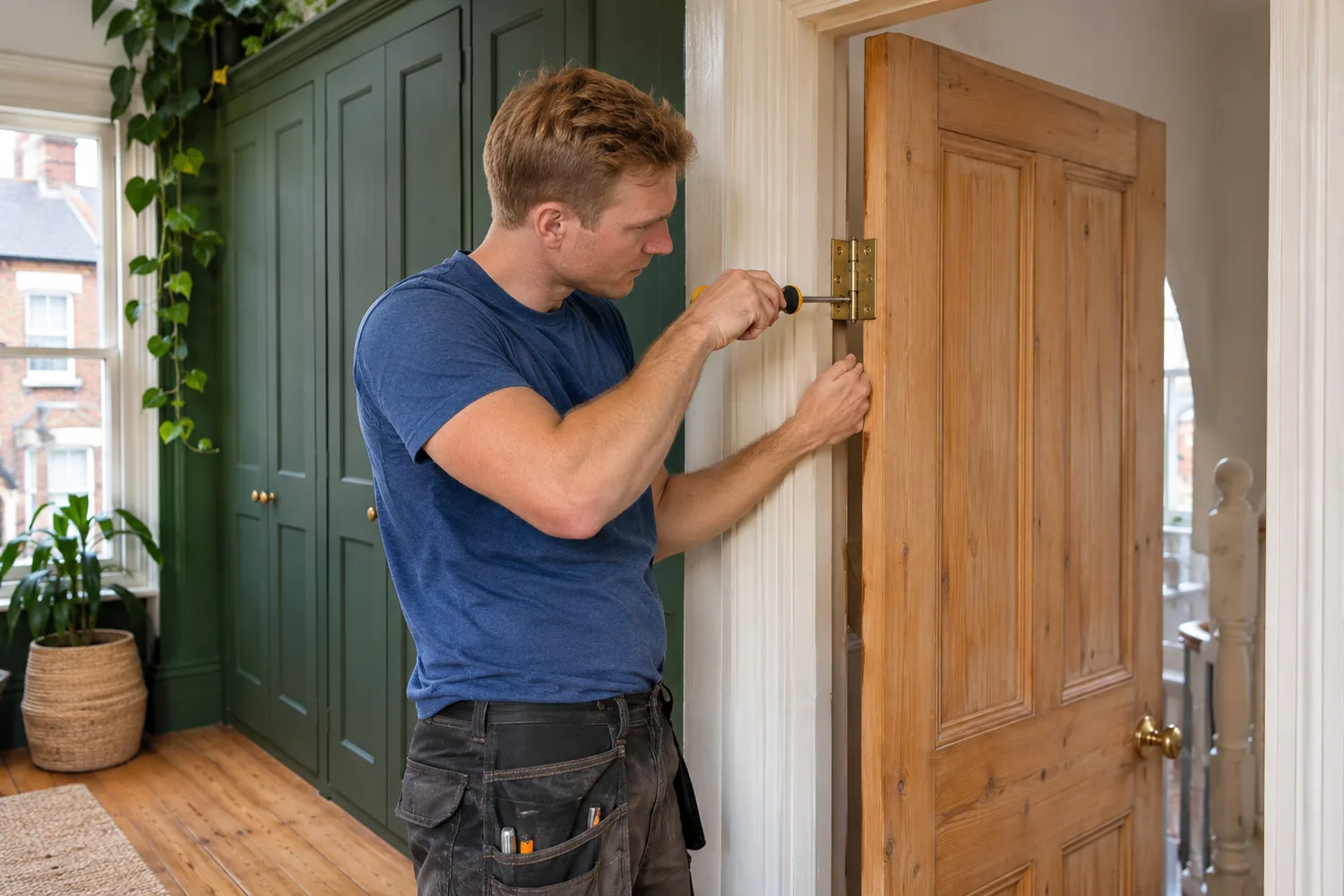
We adjust suitable internal doors and minor fittings after checking how the fault occurs. Hinges, handles and latches are examined before deciding whether adjustment, replacement hardware or another repair is appropriate. We protect the adjacent floor and painted edges while working. A fresh coat can reduce clearance, but we do not assume paint is the only cause of a door that catches or remove timber without reviewing the fitting.
We discuss compatible replacements and any exposed marks left by the old hardware. Where the work includes decorating, the repair and finish are sequenced so new paint is not damaged by later fitting adjustments. We operate the door and latch after the repair. Fire doors, structural defects and specialist security hardware require appropriate separate assessment; they are not treated as ordinary trimming or hinge work just because other minor repairs are booked.
Window fittings, filled holes and painted surfaces
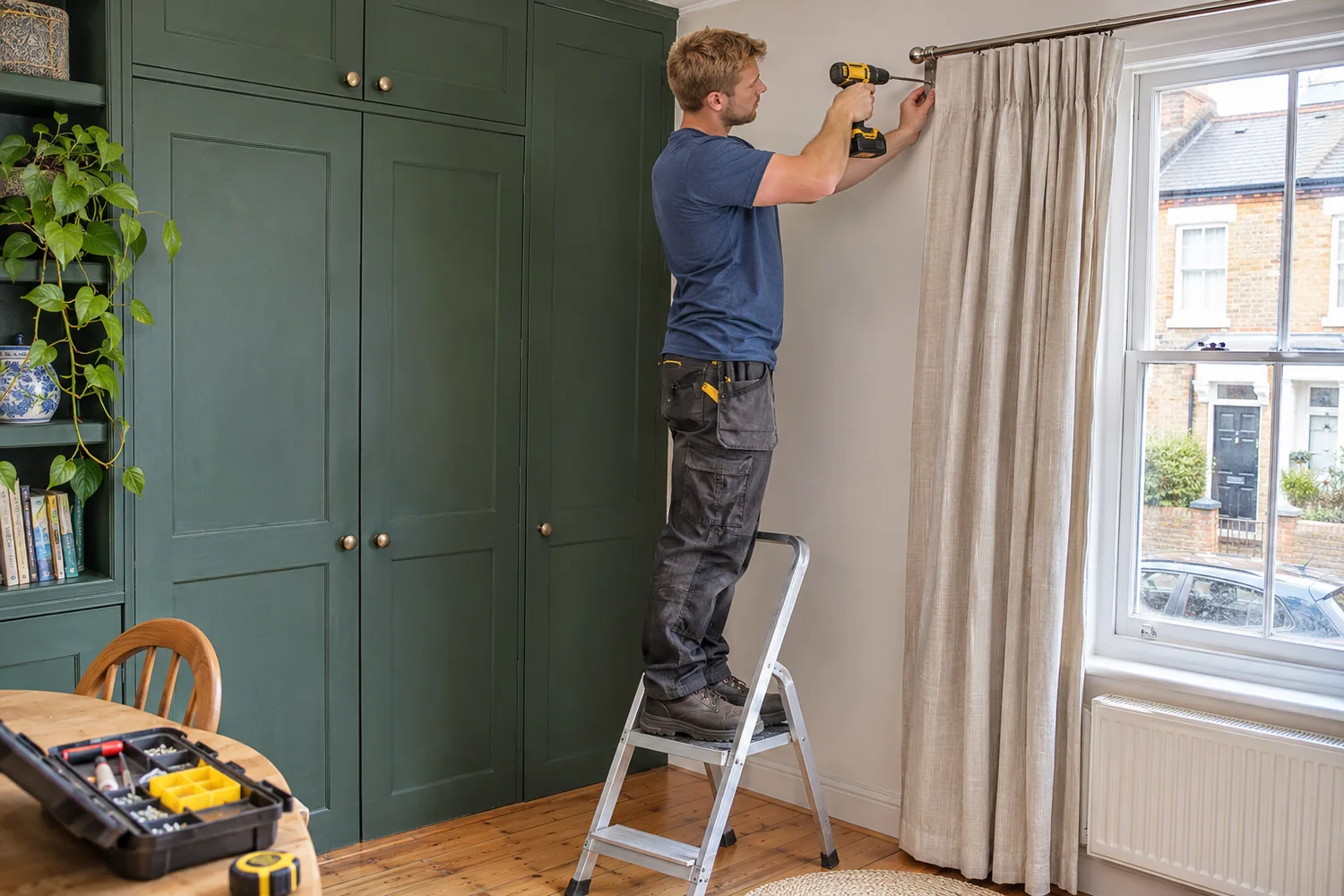
We remove or fit suitable curtain poles, tracks and blinds to the agreed arrangement. Before removal, we check whether the item is to be reused and how it is attached. For a new fitting, we assess the complete kit, bracket positions, projection and substrate. Blind control and safety components remain part of the product installation. We check movement and clearances after fitting rather than judge completion by appearance alone.
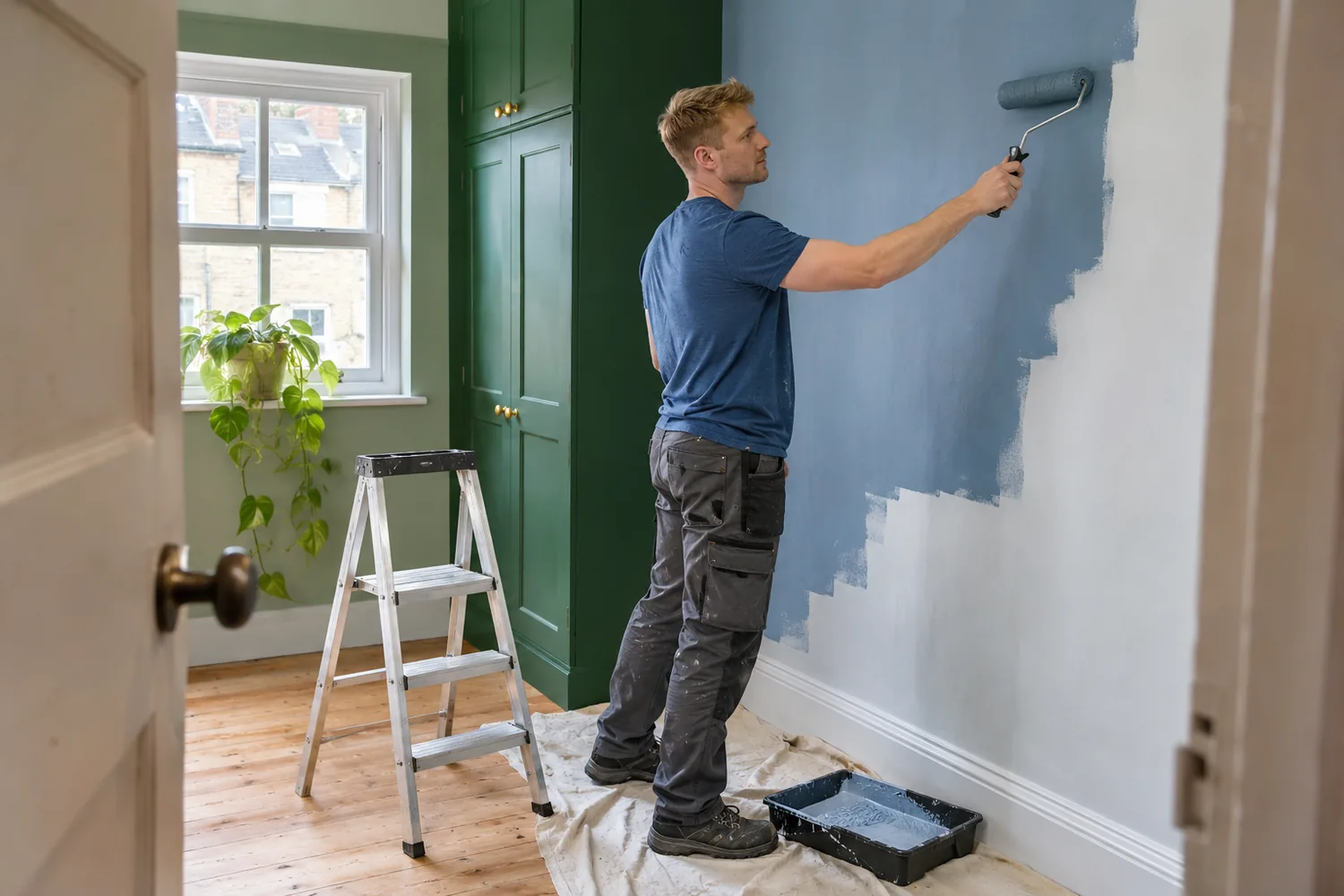
We fill suitable small fixing holes, prepare minor surface defects and paint the agreed area. We distinguish a filled patch from a full decorative finish: filler may need drying and sanding, and an aged paint surface may not accept an invisible local match. We discuss paint type, colour and coverage before application. Loose plaster, extensive damaged board or persistent moisture are explained as separate problems before cosmetic work proceeds, so a neat surface does not hide a repair that remains incomplete.
HOW THE WORK PROGRESSES
Inspect the exposed wall before the next stage.
Agree what stays and what goes
We record the fittings to remove, items to reuse and the intended replacement positions. We discuss the finish expected around old holes and the approving contact. New electrical or structural work is identified separately from ordinary bracket and surface tasks.
Inspect after authorised removal
We protect the work area and remove the agreed fitting using an appropriate method. The exposed fixing points and surface are assessed before new anchors or filler are selected. Hidden damage is explained before it becomes additional repair work.
Prepare and install at the right stage
We make agreed suitable repairs and allow the required drying before loading or finishing the area. New fixtures are installed with support appropriate to their own requirements. Painting and final fittings are sequenced to avoid damaging newly completed work.
Show the final and remaining work
We check the installed item’s position and operation, identify any drying restriction and explain where a patch or further stage remains. We gather agreed debris and distinguish completed surface work from outstanding materials, decoration or specialist repairs.
PUBLISHED LONDON COMPARISON
Plan the labour. Confirm the actual price.
We discuss the work and our price before booking. The charging basis and any extras are confirmed for the actual property. These standard external London figures are a comparison, not our confirmed rates or a forecast of your visit length.
| Published weekday daytime charge | External comparison |
|---|---|
| First 30 minutes | £47 |
| Each further 30 minutes | £36 |
| Minimum one-hour labour total | £83 |
| 1½ hours, calculated on the same basis | £119 |
| Materials and additional costs | Materials and shopping time are extra; congestion charges excluded. |
The source states all taxes are included in its rates. This does not establish our VAT position or the extras in our quotation. Published London labour comparison, checked 4 November 2026. Source terms and availability apply.
COMPARISON CALCULATOR
First half-hour. Further half-hours.
Change the planned labour hours to see the same published charging model. The initial period is charged once. This is not an appointment duration estimate or an offer for your property.
PLANNED LABOUR TIME
1 hour
External labour comparison
£83
£47 first ½ hour + £36 further ½ hour
One-hour minimum in this comparison; further half-hour steps. Materials, shopping, congestion and other extras are outside this calculation. No area premium or separate package price is assumed.
PROPERTY DETAILS THAT AFFECT THE WORK
Retained fabric and the exact property
We check any relevant property restriction against the actual Leytonstone address and proposed alteration. Waltham Forest Council provides conservation and listed-building information for those checks. Its information does not make every wall repair in the district a consent matter, nor does a previous bracket prove that its holes were authorised. We clarify any applicable instruction before changing retained fabric.
In a rented or managed property, we ask who approves the extent of removal and making good. The owner may want a bracket retained, a fixing position reused only if suitable or a complete wall repainted after repair. We establish that instruction before selecting the finish. Access contacts help us identify the affected items, but additional spending or alterations are referred through the agreed approval route rather than assumed from the fact that the room is available.
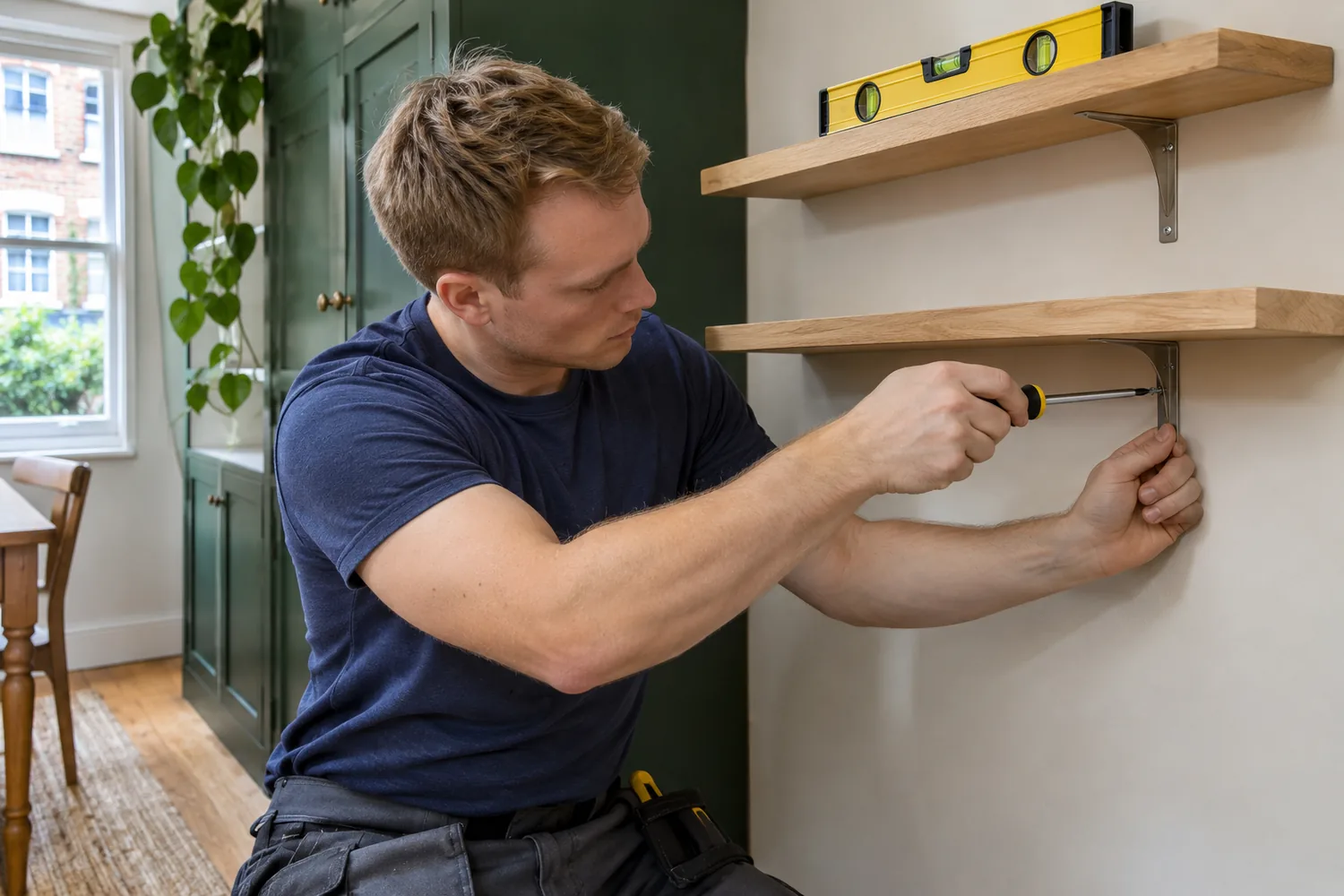
Illustrative shelf-fitting work. Images show service tasks, not claimed customer projects or local premises.
QUESTIONS ABOUT YOUR VISIT
Bracket changes and making good.
Will a new bracket cover the old holes?
That depends on both products and their agreed positions. We review the dimensions and fixing patterns before relying on coverage. Even if the new bracket conceals a hole visually, the wall still needs sound support; concealment does not establish that an old fixing point can be reused.
Can you remove a shelf without damaging paint?
We work with suitable protection and an appropriate removal method, but paint may be bonded to the bracket or existing fixings. We discuss the likely finish and any making good before removal. We do not promise that an old fitting will leave an untouched painted surface.
Is filling holes the same as repainting the wall?
No. We agree those as distinct outcomes. Filling and sanding prepare a suitable small defect, while a decorative finish involves the coating and area agreed. An aged colour or sheen may show a local patch, so we discuss whether a larger area needs painting.
Can the new shelf be loaded immediately after making good?
We follow the requirements of the repair material and fixing method. Some preparation needs drying before it can be drilled, finished or loaded. We explain that sequence rather than assume a completed-looking patch is ready for the same load as sound existing substrate.
What if removing the old fitting exposes damaged board?
We stop treating the job as a simple replacement and explain the condition found. We discuss the repair or alternative position, materials and any cost change before proceeding. If specialist or more extensive work is needed, we identify it instead of concealing it behind a new fitting.
Can an agent arrange removal while the tenant provides access?
Yes, with a clear authorised instruction covering the items, replacement positions and expected finish. We agree how additional findings will be approved. The tenant can show the room, but we do not assume they can approve a different position or extra decoration on the owner’s behalf.
Related fitting and repair services
See TV mounting for bracket compatibility, painting and decorating for surface finishes and window fitting for poles, tracks and blinds.
A nearby property with its own repair list
We can review related work at separate properties in Leyton, Wanstead and Walthamstow. Each has its own support and finish requirements; browse the coverage page for further areas.
HANDYMAN LOCAL SERVICES / LEYTONSTONE
Show us the old item. Tell us what replaces it.
Send the Leytonstone postcode, photographs of the current fitting and the new product details. We discuss removal, support, materials and finish before booking.