LOCAL HANDYMAN LONDON

HANDYMAN HIGHGATE / REPAIRS & FITTING
Handyman Highgate.
- We identify the component and retained feature before agreeing a change.
- Ordinary repairs assessed separately from specialist joinery or protected-feature alterations.
- Furniture, screens, window fittings and decoration planned around the existing interior.
MAKE YOUR
SPACE WORK.
Painting. Fitting. Fixing.
RETAINED FEATURES
Can a loose fitting be repaired without replacing the joinery?
We inspect the hardware and material holding it before discussing adjustment or compatible replacement parts. A loose hinge screw and damage to a door or frame need different work. We identify what should remain and any permission relevant to the actual property before accepting an alteration.
MAINTENANCE OR ALTERATION
Do we treat every Highgate repair as a protected-building job?
No. We check the actual property, proposed task and relevant instructions rather than assume a status from the area name. Ordinary assembly and hardware maintenance are distinguished from changing a protected feature, specialist restoration or work needing separate approval. The owner or authorised contact confirms applicable permissions.
HANDYMAN WORK IN HIGHGATE
Understand the fitting before changing the feature.
We assess Highgate household repairs with the existing fittings identified before a change is agreed. An older-looking handle may need compatible hardware, while a catching door may involve its hinge, fixing material or frame. We discuss the actual defect and what should remain rather than replace a wider part of the interior automatically.
We also assemble supplied furniture, mount suitable televisions and shelves, assess minor plumbing, fit curtains or blinds and prepare agreed decorative surfaces. We work with homeowners, tenants, landlords, agents and businesses, confirming authority and materials for each task. Ordinary maintenance is kept distinct from specialist joinery, restoration and alterations needing another assessment; those services are not claimed merely because the property is in Highgate.
BEFORE THE VISIT
Compatible parts and the retained material.
We ask for photographs showing both the faulty component and the surrounding joinery or surface, with product links for new items. We identify what is to be retained, what may change and the intended repair result. Replacement dimensions, proprietary hardware and matching coatings are reviewed, with material supply and any collection agreed before attendance. An unidentified spare is not assumed to provide a suitable repair.
We confirm the authorised customer and relevant approval for the actual property. Working space, protection, access and the receiving contact are agreed with the owner, resident, agent or business as applicable. Furniture handling and waste arrangements are separately specified. A new defect or proposal to change retained material is raised before work is extended, rather than treated as an unapproved consequence of completing the original task.
| Jobs reviewed together | Preparation | Materials and fittings | Visit consideration |
|---|---|---|---|
| Loose internal hinge | Door type, fixing material and retained hardware | Compatible repair component where suitable | No automatic trimming or replacement joinery |
| Wardrobe near existing trim | Product depth, assembly space and restraint | Specified hardware and suitable authorised fixings | Furniture fit does not authorise changing the room |
| Screen or shelf near a feature | Supporting wall, product and retained surface | Agreed bracket, anchors and cable finish | Protected or specialist work assessed separately |
| Window fitting and paint repair | Product, mounting point and existing coating | Complete safety fittings and specified preparation | Making good and wider decoration distinguished |
REPAIRS AND INSTALLATIONS
Maintenance around the existing interior.

Kitchen hardware and taps assessed without unnecessary change
We inspect suitable cupboard handles, hinges and drawer fittings to establish the cause of the fault. We check mounting plates, fixing centres and surrounding material before adjustment or replacement. A similar finish does not establish compatibility, and a larger new handle may expose or conceal old marks differently. We discuss that visible result before changing hardware the customer intended to retain.
We also assess suitable dripping taps, accessible connections and minor cistern faults after reviewing the fitting and water isolation. We identify compatible components rather than treat every leak as a complete replacement instruction. After agreed work, we operate the fitting and inspect accessible repaired joints. Concealed leaks, specialist hot-water systems and gas equipment are separately assessed, with further repair or decorative work discussed before it is added.
Furniture assembled around the existing room
We build supplied beds, wardrobes, desks, tables and drawer storage using their complete instructions. We check visible panels and hardware, protect the agreed working area and fit the specified supports, backing and moving parts. We review the intended position with existing skirting, trim and doors in mind rather than assume the room can be altered to accommodate an unsuitable product.
We discuss the space required to lay out panels, raise a frame and handle large components. Required restraints are assessed with the supporting surface and authority to drill before handover. Missing parts, damaged material or an unsuitable position are raised before work conceals the issue. Carrying, old furniture movement and packaging removal are separate arrangements unless included; assembly does not automatically authorise changes to retained joinery.

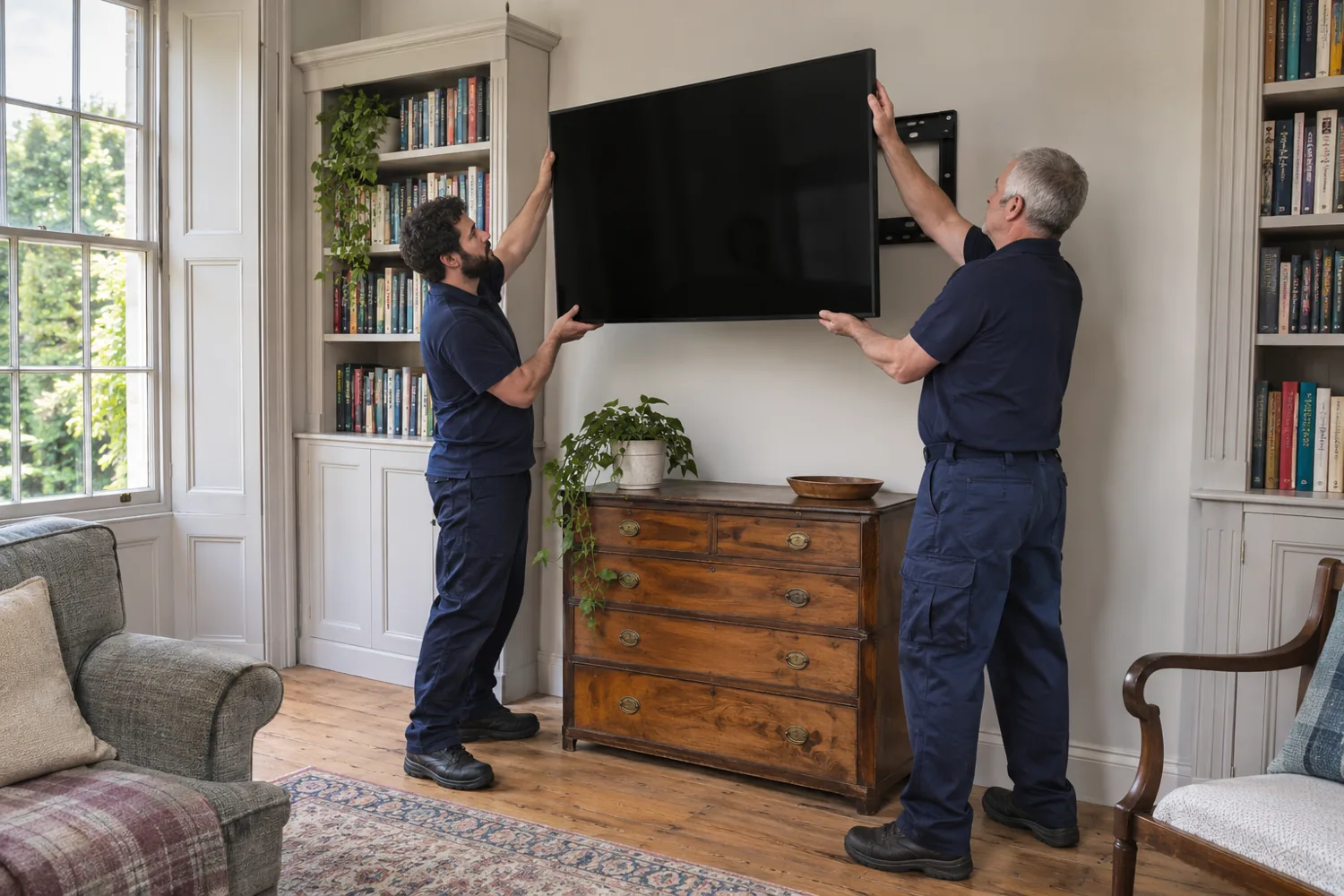
Screens and shelves without assuming every surface is a fixing point
We assess suitable television brackets, shelves and other agreed wall fittings using the product details, intended loading and supporting structure. We agree the position and inspect existing holes or damage rather than automatically reuse them. Decorative trim or panelling is considered separately from the wall support behind it, and any feature that must remain untouched is discussed before mounting is accepted.
We review bracket movement, viewing position and connection access for a television, with an agreed cable finish identified before drilling or lifting. A surface cover is different from a new socket or fixed-wiring change, which needs the appropriate trade. Reinforcement, another fixing arrangement or a different position may need discussion. We explain those requirements rather than modify a product or retained surface without authority.
Door adjustments with the retained material understood
We inspect suitable internal-door hinges, handles, minor latches and frames to determine why movement or closing is poor. We assess the fixing area, door type and hardware dimensions before agreeing adjustment or compatible replacement parts. A catching leaf does not automatically authorise planing, trimming or replacing surrounding joinery. We explain whether the issue appears to be hardware, alignment or material requiring another assessment.
We also review cupboard-door gaps and appropriate drawer runners where included. We operate completed repairs and identify visible making good left by changed fittings. Fire doors, specialist security arrangements, structural movement and protected-feature alterations need their own competence or authority. We do not present ordinary maintenance as specialist conservation work or assume an old-looking fitting can be replaced without discussing what must remain.


Window fittings and decoration with the existing finish considered
We fit suitable poles, tracks and supplied blinds after reviewing dimensions, complete brackets and the mounting surface. We agree operating clearances and check required safety components. Where a fixing position affects existing trim or another retained feature, we discuss the instruction before drilling. An incomplete or unsuitable product is explained rather than cut or altered without establishing an appropriate method.
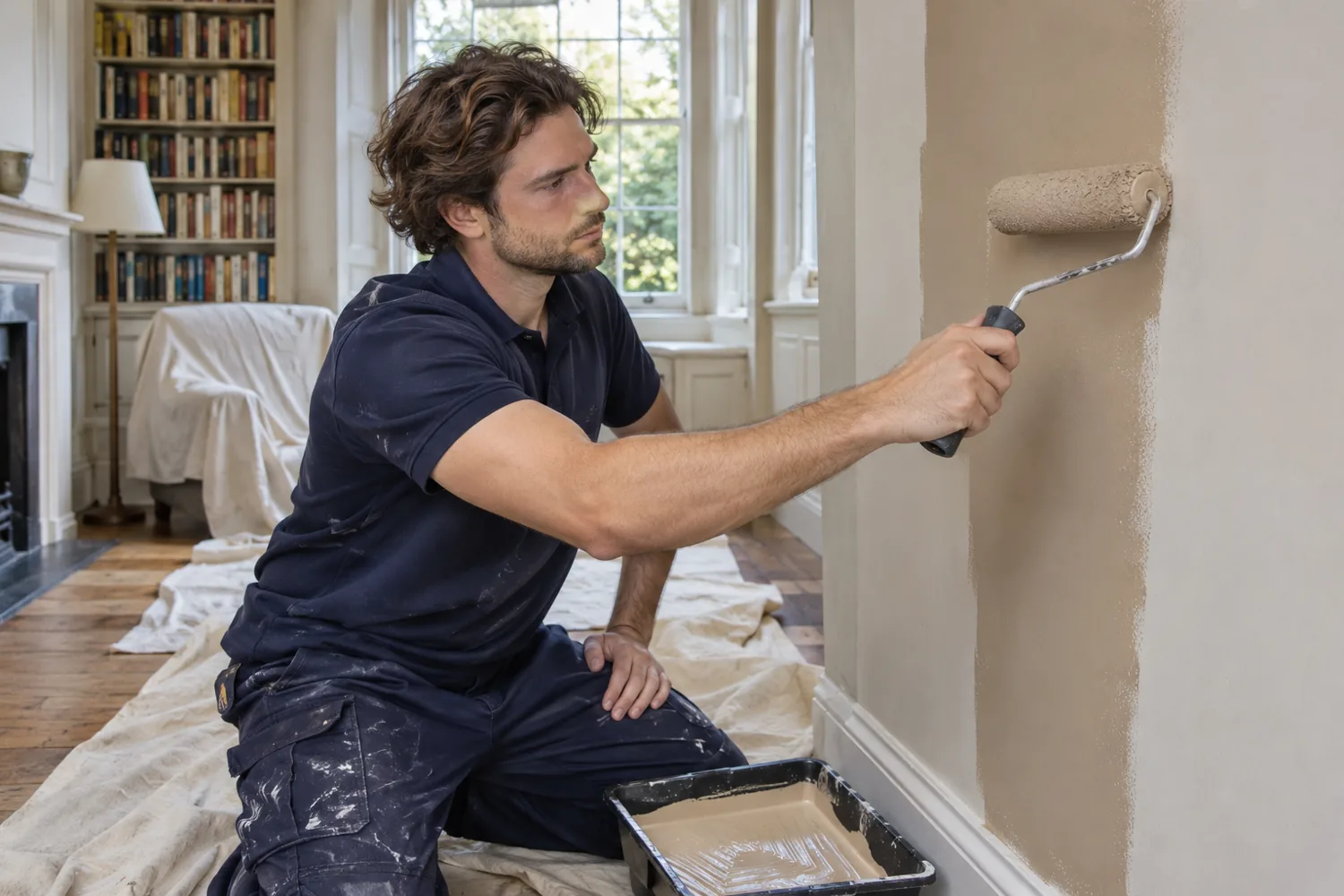
We prepare and paint agreed walls, ceilings and suitable interior woodwork after reviewing the surface, existing coating and intended result. We discuss preparation and the extent of making good, distinguishing a local patch from a wider finish. Older coating may not blend invisibly, and drying or curing affects use. Damp, failed material and specialist finishes need assessment before a new product covers the underlying condition.
HOW THE WORK PROGRESSES
A defined repair and a checked result.
Identify the fitting and retained features
We inspect the reported fault and establish which components, surfaces and joinery should remain. The request is defined as a repair or proposed change rather than left as a broad instruction.
Check compatibility and authority
We compare suitable replacement parts and the work needed around them, confirming relevant permission before altering a feature. Specialist requirements are identified before the ordinary handyman task proceeds.
Carry out the agreed maintenance or fitting
We assemble products, install assessed fittings and complete authorised repairs, keeping additional material or work decisions visible. An unexpected finding is discussed before it is concealed or another feature is changed.
Review operation and the visible finish
We demonstrate repaired movement, inspect agreed accessible connections and identify outstanding components or decorative stages. Product instructions and limitations are explained at handover rather than promise an unassessed restoration result.
PUBLISHED LONDON COMPARISON
Plan the labour. Confirm the actual price.
We discuss the work and our price before booking. The charging basis and any extras are confirmed for the actual property. These standard external London figures are a comparison, not our confirmed rates or a forecast of your visit length.
| Published weekday daytime charge | External comparison |
|---|---|
| First 30 minutes | £47 |
| Each further 30 minutes | £36 |
| Minimum one-hour labour total | £83 |
| 1½ hours, calculated on the same basis | £119 |
| Materials and additional costs | Materials and shopping time are extra; congestion charges excluded. |
The source states all taxes are included in its rates. This does not establish our VAT position or the extras in our quotation. Published London labour comparison, checked 4 November 2026. Source terms and availability apply.
COMPARISON CALCULATOR
First half-hour. Further half-hours.
Change the planned labour hours to see the same published charging model. The initial period is charged once. This is not an appointment duration estimate or an offer for your property.
PLANNED LABOUR TIME
1 hour
External labour comparison
£83
£47 first ½ hour + £36 further ½ hour
One-hour minimum in this comparison; further half-hour steps. Materials, shopping, congestion and other extras are outside this calculation. No area premium or separate package price is assumed.
PROPERTY DETAILS THAT AFFECT THE WORK
The actual boundary and feature are checked
Camden publishes a Highgate conservation appraisal and boundary maps used when assessing development proposals. We check the actual address, responsible authority and feature before agreeing a change, rather than assume the same designation applies throughout Highgate. Conservation-area status and a building’s individual listing are not treated as interchangeable descriptions.
We ask which doors, trim, surfaces or window features must remain and whether the proposed work has already been authorised. The repair decision is then made for the particular fitting. Where consent, specialist joinery or another assessment is relevant, we identify that requirement before an alteration proceeds. A maintenance enquiry does not become permission to cut or replace a retained feature because a compatible component is difficult to find.

Illustrative shelf-fitting work. Images show service tasks, not claimed customer projects or local premises.
QUESTIONS ABOUT YOUR VISIT
Questions about retained joinery.
Can you tighten an old hinge without replacing the door?
We inspect the hinge and the material holding it before agreeing the repair. A loose screw may differ from a damaged fixing area or worn component. We discuss compatible parts and the retained finish, identifying any further assessment needed rather than replace the whole door automatically.
Does a Highgate address mean every interior task needs consent?
We do not make that assumption. We establish the particular property’s status, the feature and the proposed work, then confirm relevant permissions with the authorised contact. Ordinary maintenance, a protected-feature alteration and specialist restoration are kept distinct rather than inferred from the area name.
Can a modern handle replace an older-looking fitting?
We review the dimensions, latch arrangement, fixing centres and intended change before agreeing installation. We also discuss visible holes or outlines and retained features or permissions. Appearance alone does not establish compatibility or authority to replace the existing hardware.
Will you cut skirting to make a wardrobe fit?
That is not assumed within furniture assembly. We assess the product, position and room clearance, then discuss the authorised options. Changing retained trim may need another assessment or permission. We do not alter the room merely because a supplied product does not fit the intended position.
Can curtain brackets be fixed through decorative trim?
We assess the supporting surface, product and specific feature before agreeing the position. Decorative material does not automatically provide suitable support, and a retained or protected feature may affect the permitted work. We discuss another position or further clarification rather than drill simply because the bracket fits there.
Does a hardware repair include restoring a historic finish?
We discuss the decorative result separately from the mechanical repair. Older coatings, specialist materials and protected features can require particular assessment or another specialist. We identify what ordinary preparation or painting can be agreed without claiming that a small fitting repair provides a complete conservation or restoration service.
Related fitting and repair services
We assess ordinary fitting repairs, furniture assembly and TV mounting alongside minor plumbing, window fittings and agreed decoration. Specialist restoration and other regulated work are separately assessed.
A nearby property with its own repair list
Our coverage overview includes Muswell Hill, Hampstead and Crouch End. We check the actual property, retained features and responsible authority for each address rather than apply one area’s designation to every building.
HANDYMAN LOCAL SERVICES / HIGHGATE
Show us the fitting and what must remain.
Send the Highgate postcode, photographs and proposed work. We will review the repair, compatible materials and relevant authority before arranging attendance.