LOCAL HANDYMAN LONDON

HANDYMAN HANWELL / REPAIRS & FITTING
Handyman Hanwell.
- A catching door assessed in motion before timber or hardware is changed.
- Compatible hinge, latch and handle decisions explained before fitting.
- Door repairs sequenced with nearby furniture, window fittings and paintwork.

MAKE YOUR
SPACE WORK.
Painting. Fitting. Fixing.
DOOR OPERATION
How do we approach a sticking internal door?
We observe the door opening and closing, inspect hinges and fixings and review the latch and frame clearance. For Hanwell repairs we identify the cause before choosing adjustment, replacement hardware or another method. We do not assume every catching door needs trimming, and fire or specialist doors need separate assessment.
DECORATING ORDER
Should a door fault be reviewed before painting?
We can discuss the repair and decorative work together so the door’s operation is considered before its final finish. Adjustment or a hardware change can affect painted edges and visible marks. We agree the preparation and coating afterwards, with drying requirements explained rather than apply paint over an unresolved clearance problem.
HANDYMAN WORK IN HANWELL
Watch the door move. Then choose the repair.
We repair suitable internal door fittings in Hanwell and connect that work to the other practical jobs around the room. A door may catch at one edge, fail to latch or feel loose at the handle, but those symptoms need different checks. We watch it in use and assess the fittings and surrounding material before selecting a repair. That gives the customer an explanation of what is being changed instead of a default instruction to trim or replace.
We can review furniture assembly, shelves, television brackets, minor plumbing, curtain fittings and decoration alongside the door work. We establish the authorised result for each task, the relevant products and materials and the approving contact. Homeowners, tenants, landlords, letting agents and business contacts may have different roles in access and permission. We make those roles clear before altering a fitting or adding a replacement part to the original list.
BEFORE THE VISIT
Hinges, latch and the finish around them.
For a door enquiry we ask for photographs of the full door, hinges, latch and the point where it catches, with a description of when the problem occurs. We discuss whether the door is ordinary internal joinery or a fire or specialist fitting. Product references help with new handles and latches, while some conditions need inspection before a part can be chosen. The intended finish and any retained-hardware requirement are agreed before replacement.
We plan the rest of the list around access and sequence. Furniture may need to remain clear until the door is checked, and paint may need to follow adjustment rather than precede it. We confirm who supplies hardware, brackets, furniture and coatings, including any collection. The approving contact and access arrangement are established, with changes in method or cost discussed before proceeding. Our actual price basis is confirmed before booking; the comparison calculator does not diagnose a door fault or guarantee its duration.
| Jobs reviewed together | Preparation | Materials and fittings | Visit consideration |
|---|---|---|---|
| Door catches near hinge | Observe travel and inspect screw grip | Compatible hinge hardware if required | Identify cause before trimming |
| Latch misses strike | Check handle, latch and closing position | Matched latch or strike component | Operate several times after repair |
| Wardrobe beside door | Confirm product and both door swings | Complete furniture kit and restraint | Keep hinge access until repairs are checked |
| Door repair and repaint | Agree hardware and finish area | Preparation materials and specified paint | Adjust before final coating and allow drying |
REPAIRS AND INSTALLATIONS
Door fittings and the room around them.

Cupboard hinges and accessible plumbing
We adjust suitable cupboard fronts and tighten compatible handles after checking the hinge plate and surrounding panel. A door that has dropped may need alignment, but damaged screw holes or a worn hinge can require a different repair. We explain that condition before selecting a component. Replacement hardware is checked for compatibility and visible differences rather than fitted because its finish looks broadly similar.
We also review accessible tap and small plumbing faults. We identify where water appears, check the fitting and confirm safe isolation before dismantling. A washer or cartridge must suit the actual product. We protect nearby surfaces and check operation and visible joints after the authorised repair. Concealed leaks, heating faults, gas work and specialist systems are assessed separately. Related making good follows the source repair and necessary drying, not a coat of paint over continuing moisture.
Furniture with clearance for the repaired door
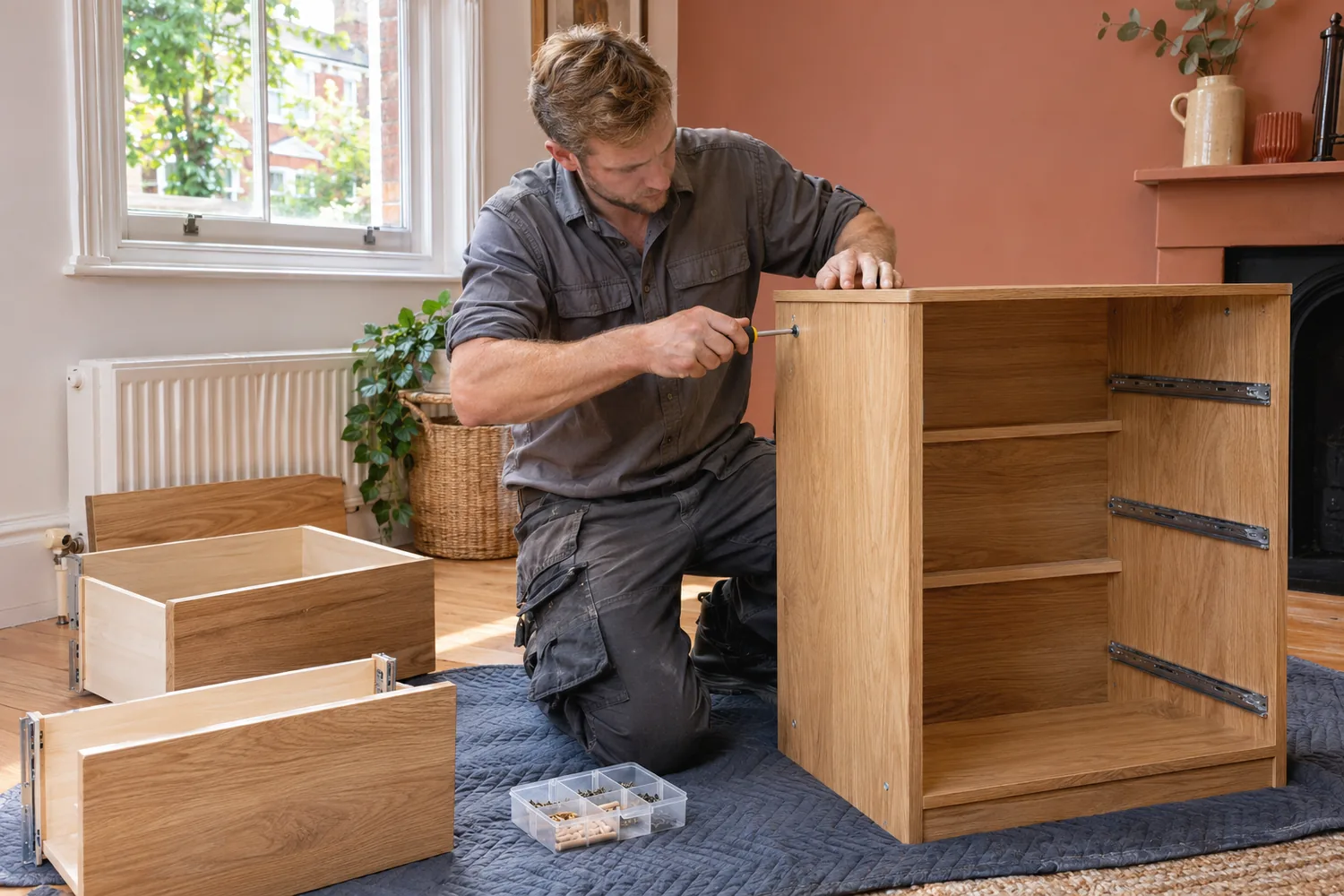
We assemble suitable flat-pack beds, desks and storage units from the correct instructions. We discuss the final position and panel-handling space before construction, including whether the room door can still open and a drawer can be used. Hardware is kept organised by product, and missing or damaged components are explained before substitutions are considered.
After assembly we adjust drawers and doors in the agreed position and review any product-specified wall restraint with the actual wall and permission. We keep access to door hinges and other fittings that remain part of the repair list. Moving old furniture or dismantling an existing unit is separately discussed. The fact that a new wardrobe fits the wall does not mean the room’s door travel and maintenance access can be ignored.
Wall fittings placed around opening doors
We install shelving after agreeing span, depth, intended use and bracket positions. The supporting wall and condition of existing holes are assessed before selecting anchors. We check projection against nearby doors and cupboards, so a shelf does not become an obstacle after a repaired door opens properly. If an old position needs making good, we agree the surface result rather than assume the new fitting will hide it.
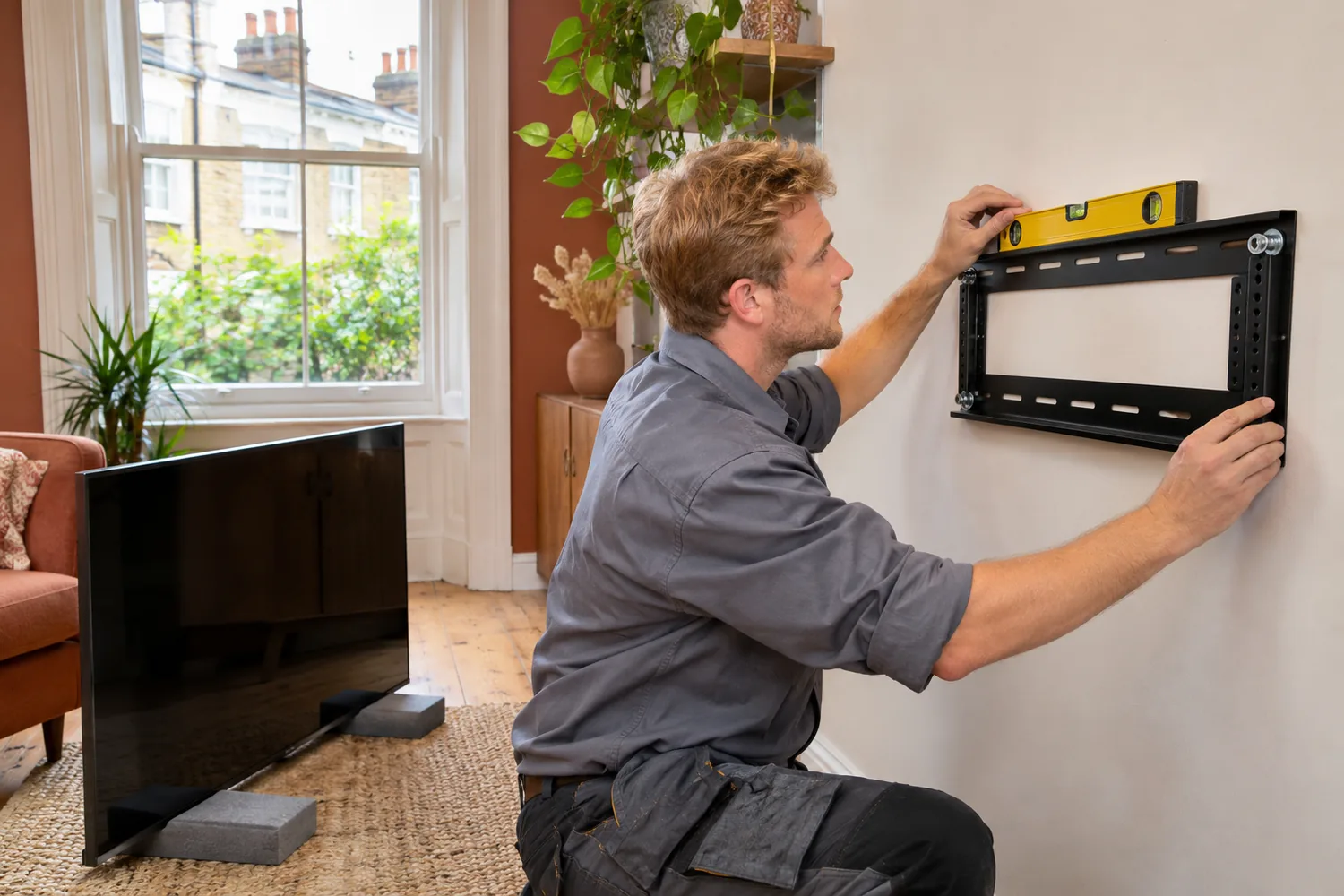
For television mounting we check the screen model, bracket specifications and wall support. We agree viewing height and review bracket movement and accessible cable clearance. A swinging screen must not strike furniture or trap cables. New sockets, concealed routing and fixed electrical work remain separate. We check the completed position and explain any outstanding cable or surface work so mounting is not presented as a wider electrical or decorative installation.
Hinges, latches and handles checked as a system
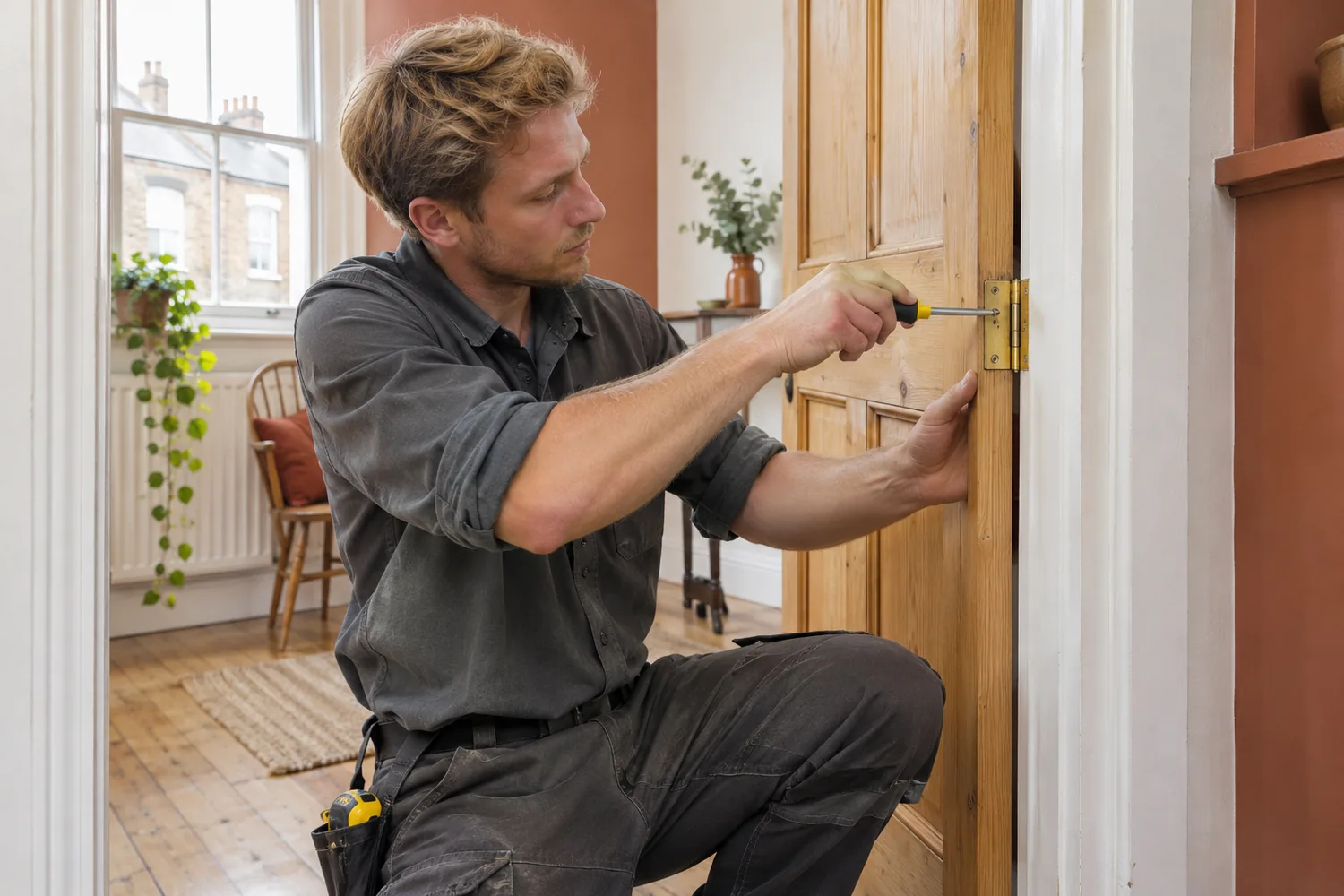
We inspect suitable internal doors while they move, checking the hinge side, contact points and latch engagement. We review whether screws grip, whether the hardware is compatible and whether the fault changes as the handle is used. Tightening a handle will not correct a latch that meets the strike incorrectly; trimming an edge will not repair a loose hinge fixing. We explain the observed issue before choosing the method.
We carry out the authorised adjustment or compatible minor hardware replacement with the surrounding surface protected. Visible differences and any additional preparation are discussed before fitting. We then open, close and latch the door as relevant, checking the result rather than only the new screw or component. Fire doors, specialist locking systems, structural movement and significant frame damage need the appropriate separate assessment and are not treated as routine domestic adjustments.
Window fittings and the final paint stage
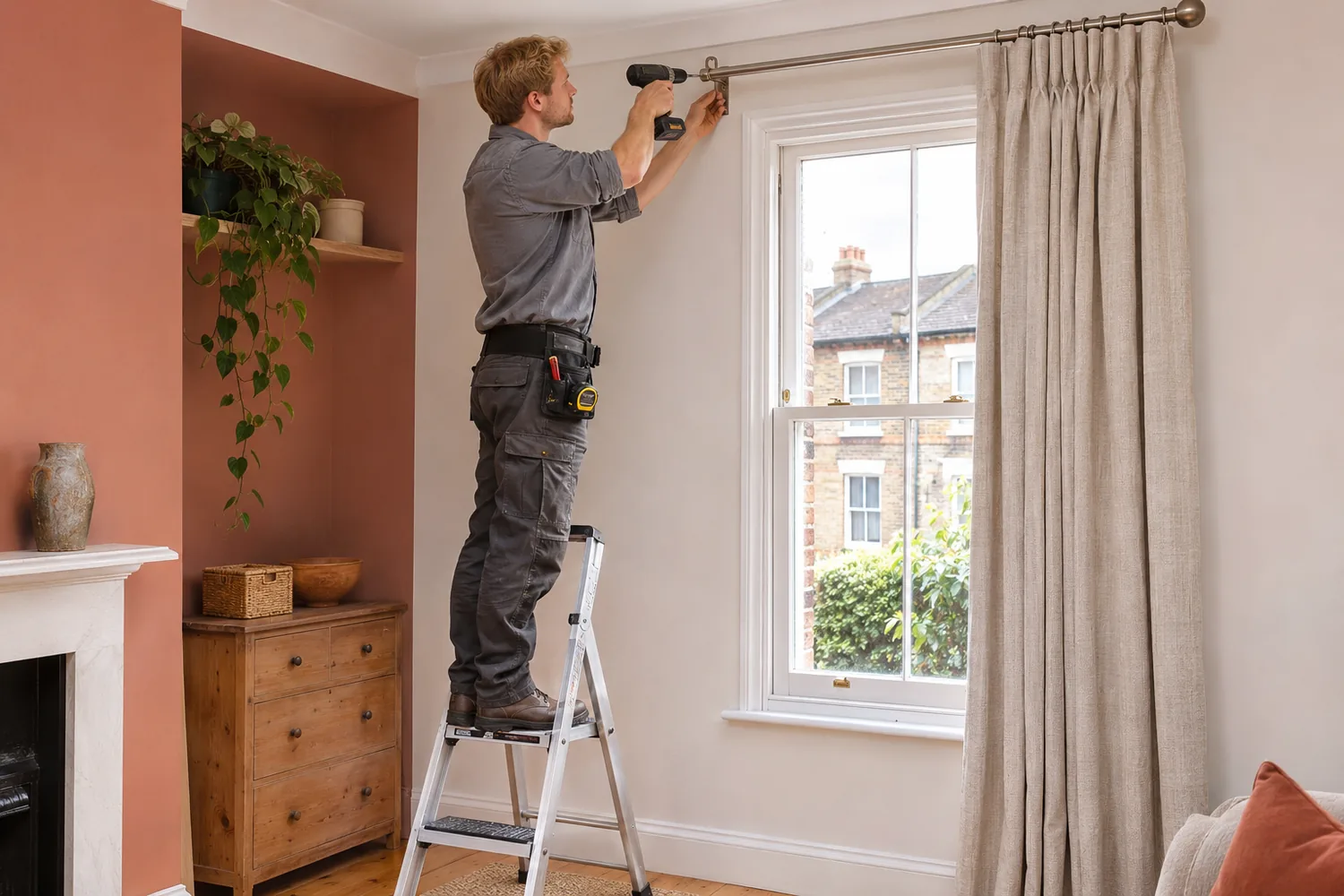
We fit suitable curtain poles, tracks and blinds after reviewing the complete kit, support and projection. We check clearance for opening windows and nearby furniture and follow the product’s control and safety arrangements. The installed fitting is operated through its intended travel. Missing components or a different bracket method are explained before changing the authorised installation.
We prepare and paint agreed interior areas, including suitable minor filling and making good around changed fittings. Door repair and hardware decisions are considered before the final edge or frame coating. We confirm colour, paint type and coverage and identify loose material or unresolved moisture before application. Drying and curing requirements are explained at handover. We do not add coats to a tight clearance without considering operation, or promise an invisible patch on an aged surrounding finish.
HOW THE WORK PROGRESSES
Inspect the cause. Check the closing action.
Describe the operation, not only the appearance
We review how the door catches or fails to latch alongside photographs of its hardware. Other products and repair tasks are listed separately. We identify the required authority and any specialist boundary before arranging an ordinary repair visit.
Observe before altering
At the property we operate the door and inspect fixings and contact points. We protect adjacent surfaces and explain whether the proposed repair remains suitable. A different component or alteration to timber is discussed before work changes the authorised result.
Adjust and coordinate the surrounding jobs
We carry out the agreed repair, then sequence assembly, fittings and decoration around the checked door position. We keep access where further work is needed and agree additional materials before using them. Specialist faults remain separate rather than being improvised around.
Check movement and finish requirements
We open, close and latch the repaired door as relevant and check completed nearby fittings. We explain drying restrictions and any deferred part, then gather agreed debris. The handover separates a working adjustment from decorative stages still awaiting completion.
PUBLISHED LONDON COMPARISON
Plan the labour. Confirm the actual price.
We discuss the work and our price before booking. The charging basis and any extras are confirmed for the actual property. These standard external London figures are a comparison, not our confirmed rates or a forecast of your visit length.
| Published weekday daytime charge | External comparison |
|---|---|
| First 30 minutes | £47 |
| Each further 30 minutes | £36 |
| Minimum one-hour labour total | £83 |
| 1½ hours, calculated on the same basis | £119 |
| Materials and additional costs | Materials and shopping time are extra; congestion charges excluded. |
The source states all taxes are included in its rates. This does not establish our VAT position or the extras in our quotation. Published London labour comparison, checked 4 November 2026. Source terms and availability apply.
COMPARISON CALCULATOR
First half-hour. Further half-hours.
Change the planned labour hours to see the same published charging model. The initial period is charged once. This is not an appointment duration estimate or an offer for your property.
PLANNED LABOUR TIME
1 hour
External labour comparison
£83
£47 first ½ hour + £36 further ½ hour
One-hour minimum in this comparison; further half-hour steps. Materials, shopping, congestion and other extras are outside this calculation. No area premium or separate package price is assumed.
PROPERTY DETAILS THAT AFFECT THE WORK
Retained doors need property-specific instructions
We ask about the Hanwell property’s retained features and any relevant restrictions before altering joinery. Ealing Council’s conservation-area review includes Hanwell boundary information. The useful step is to check the current address and proposed change, not assume that every door in the district has the same status. A listed feature, lease condition or owner instruction is reviewed separately from an ordinary fitting assessment.
We distinguish repair authority from access. A tenant can demonstrate where a door catches, while the landlord or agent may need to approve a different handle, latch or alteration to timber. We ask which fittings should be retained and whether visible changes are acceptable. If the instruction and condition do not match, we explain the proposed repair before proceeding rather than treat a general maintenance booking as permission to change the door’s appearance.
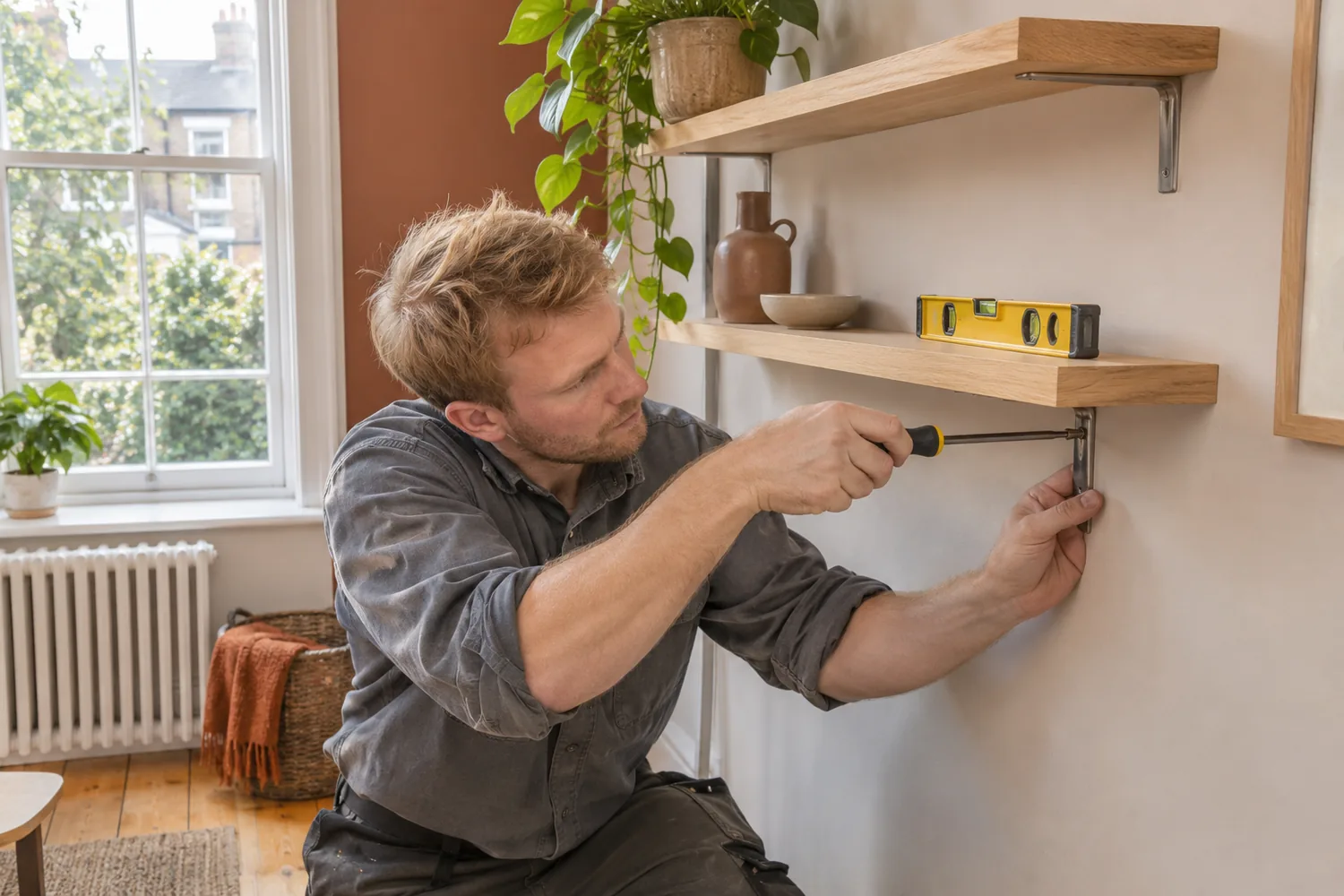
Illustrative shelf-fitting work. Images show service tasks, not claimed customer projects or local premises.
QUESTIONS ABOUT YOUR VISIT
Catching, latching and painting the repaired door.
Will you trim a sticking door straight away?
We first assess the cause and suitability. Loose hinges, worn fittings and alignment faults can produce catching without trimming being the right repair. We explain the proposed method before removing timber. Fire or specialist doors require the relevant separate assessment rather than an ordinary trimming request.
Can a loose handle cause a latching problem?
It can be relevant, but we inspect the handle, latch and closing action together before deciding. Similar symptoms can have different causes. We do not describe tightening a visible screw as a complete repair unless the door’s relevant operation has been checked afterwards.
Can I supply a new latch for the Hanwell visit?
We can review the product details and compare them with the existing preparation. Dimensions, handing and operation must be compatible. If the supplied part differs, we explain the change or correct-component requirement before enlarging holes or leaving an unagreed visible alteration.
Should the wardrobe be positioned before the door repair?
We review access and both items’ movement before deciding the sequence. A tall unit can obstruct hinges or affect the available door travel. We can plan suitable repairs before final furniture positioning rather than assemble first and discover that the original fitting is inaccessible.
Does door painting include repairing the hinges?
Only where that repair is separately reviewed and agreed. We can plan the tasks together, but paint application and hardware repair have different materials and checks. We explain a fault found during preparation before adding it to the work or painting over it.
Can a tenant approve a different handle style?
We establish the relevant owner or agent instruction before changing retained fittings. The tenant’s access role does not automatically authorise a new appearance or additional expense. We refer the proposed component through the agreed approval route and keep the affected task clear if it awaits a decision.
Related fitting and repair services
Read about small repairs and fittings, decorating and furniture assembly for the associated room work.
A nearby property with its own repair list
We review separate repair lists in Ealing, Greenford and Southall. Each door and property instruction is checked independently; the coverage list groups further enquiries.
HANDYMAN LOCAL SERVICES / HANWELL
Show where it catches. Tell us when it happens.
Send the Hanwell postcode, door photographs and other fitting tasks. We review compatible parts, authority and the repair sequence before agreeing the visit.