LOCAL HANDYMAN LONDON

HANDYMAN BOW / REPAIRS & FITTING
Handyman Bow.
- Accessible faults assessed before the surrounding surface is repaired.
- Cupboards, furniture, wall fittings and windows included in an agreed task list.
- Materials and curing stages confirmed without promising every job finishes on one day.
MAKE YOUR
SPACE WORK.
Painting. Fitting. Fixing.
REPAIR AND FINISH
Can a plumbing repair and decorating share a booking?
We can review both tasks, but the finish depends on the repair and the condition of the affected surface. We identify the fault, agree the accessible repair and explain any drying or preparation stage before painting. Combining the enquiry does not mean that a wet or damaged surface can be decorated immediately.
SEALS AND SURFACES
What do we check before renewing bathroom sealant?
We inspect the agreed joint, the condition of adjoining surfaces and any movement or sign of an unresolved leak. We discuss suitable preparation and a compatible replacement product. Renewing a seal is distinct from repairing damaged backing, loose fittings or waterproofing, which may need a different assessment before the joint is closed.
HANDYMAN WORK IN BOW
Repair the fault. Then agree the finish.
We carry out suitable handyman repairs in Bow and agree how any related making good will follow. A dripping tap beside a damaged cupboard, an old bathroom joint and a marked wall are not automatically one simple repair. We identify the fault and the surfaces affected, then establish which work can be completed independently and which must wait for parts, drying or another assessment. That avoids hiding an unresolved problem behind fresh sealant or paint.
We can also assemble furniture, mount suitable televisions, install shelving, repair ordinary door fittings and fit curtains or blinds. A homeowner may combine these with a bathroom repair; a tenant, landlord or letting agent may need separate approval for the fitting and the finish. For businesses, we agree the occupied area and responsible contact. We price the actual work discussed and record additional materials or attendance arrangements before extending the list.
BEFORE THE VISIT
Parts, surfaces and the stage between them.
We ask for photographs showing the fault in context: the complete tap as well as the connection, the bathroom joint as well as the stained surface, or the door and frame as well as the catching edge. We review any known make, model or earlier repair information. The purpose is to distinguish the item being repaired from damage that may require a separate material decision, specialist assessment or return attendance.
The agreed materials list can include a compatible cartridge or waste component, appropriate sealant, matching hinge hardware, wall anchors, filler, primer and paint. We confirm who supplies them and any collection arrangement. We also record which areas can remain out of use and who can approve a changed repair. A tenant providing entry is not assumed to authorise replacement fittings or an owner’s decorative specification; the relevant contact is established before work starts.
| Jobs reviewed together | Preparation | Materials and fittings | Visit consideration |
|---|---|---|---|
| Tap cartridge and cupboard adjustment | Identify fitting, isolation and panel condition | Matching cartridge; suitable cabinet hardware | Check the water repair and cupboard separately |
| Bath joint and adjacent paint | Assess joint, movement and affected substrate | Compatible sealant and agreed coating system | Drying or curing can separate the stages |
| Wall shelf after an old leak | Confirm repair status and sound fixing area | Appropriate anchors; making-good products if agreed | A fresh coat does not establish wall suitability |
| Door adjustment and woodwork finish | Check hinge, latch and retained coating | Matching fittings; filler or paint as specified | Mechanical repair precedes final decoration |
REPAIRS AND INSTALLATIONS
Accessible repairs and the fittings around them.
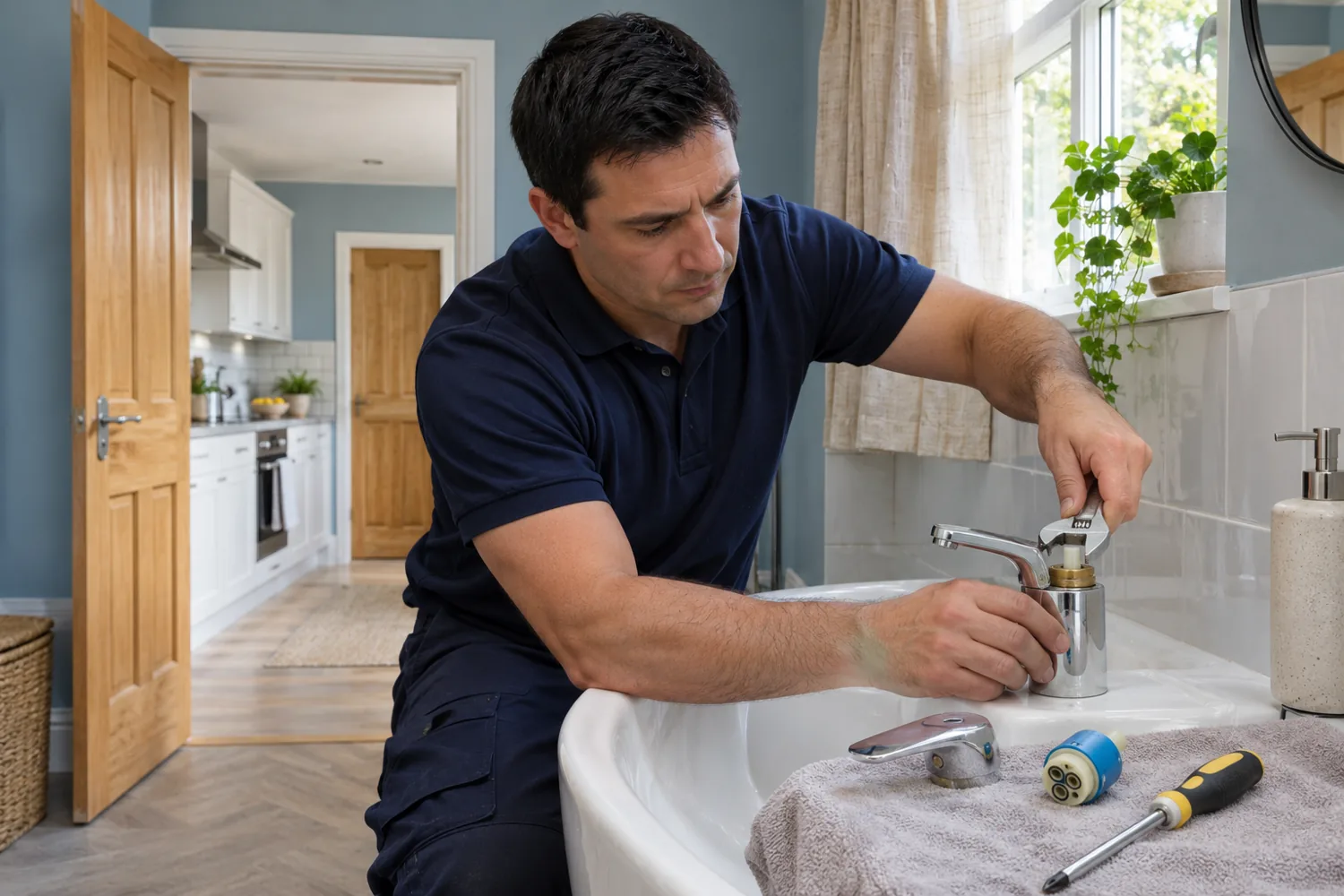
Taps, accessible connections and bathroom joints
We assess suitable tap faults and accessible waste or cistern components, identifying the fitting and the means of isolation before dismantling. A worn cartridge, a loose connection and water escaping around an adjoining joint require different checks. We discuss compatible replacement parts and protect the immediate work area. Once the agreed accessible repair is complete, we operate the fitting and inspect the visible repaired connections after the relevant supply is restored.
For an agreed sealant renewal, we examine the joint and adjoining surfaces, remove unsuitable old material as required and prepare a clean, suitable area for the specified product. We explain any drying or curing requirements and what must remain unused. We do not bridge movement, loose sanitary fittings or damaged backing with a thicker bead and call the underlying fault repaired. Gas appliances, specialist water systems and concealed building services require separate assessment.
Furniture built away from unfinished work
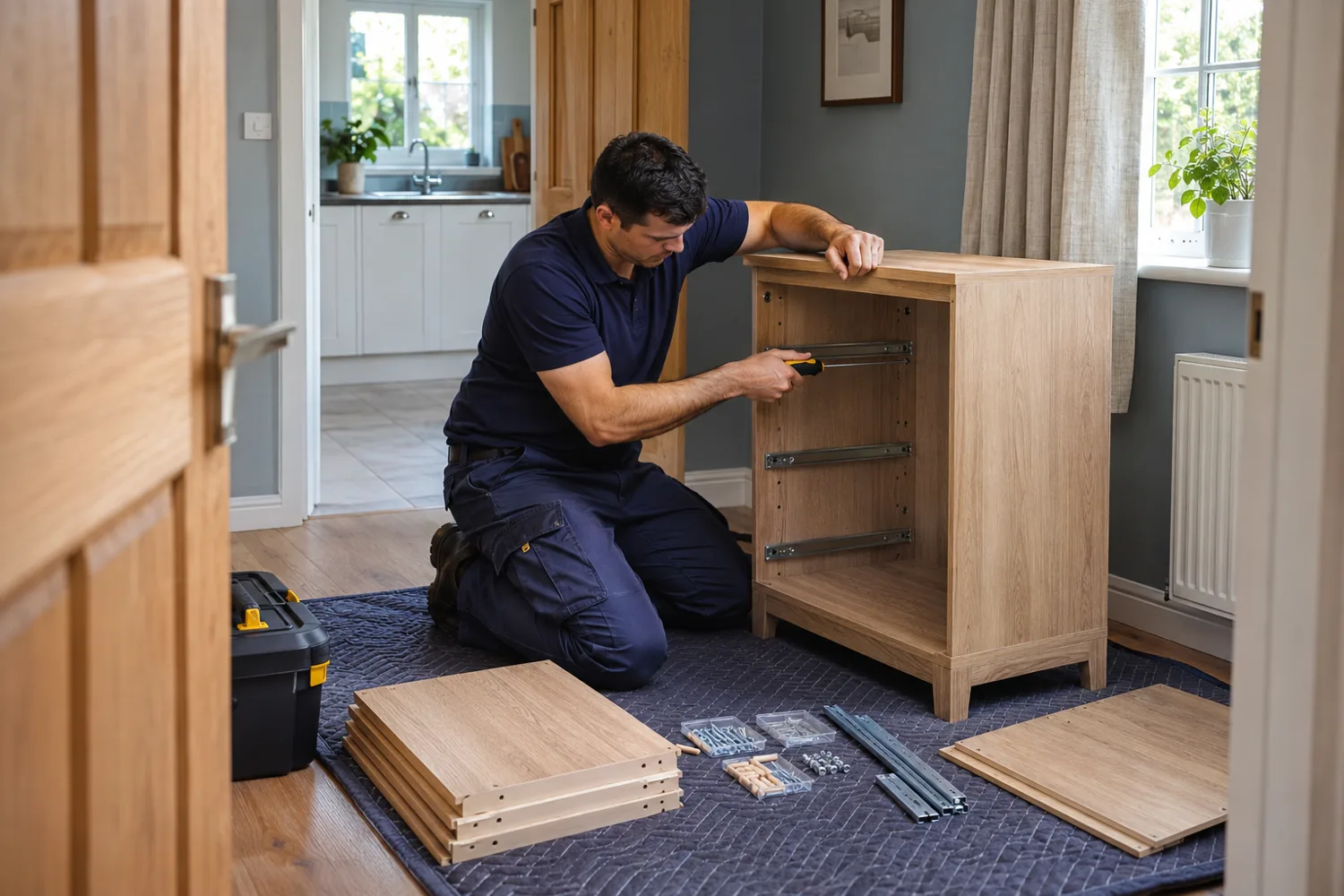
We assemble supplied beds, drawers, desks, wardrobes and suitable storage using the manufacturer’s instructions. We check components, organise the hardware and agree a protected assembly area. Where a nearby bathroom or wall is still being repaired, we identify a working space that does not depend on a fresh finish being ready. We discuss the intended position and available clearance rather than building a large frame that cannot reach its final place.
We fit the supplied supports, runners, doors and backing, adjust moving parts and inspect the assembled item in position. Required restraints are assessed with the actual supporting wall and authority to drill. Damp-damaged furniture panels are not treated as ordinary assembly components; we describe the observed condition before agreeing reuse or replacement. Carrying, existing furniture movement and packaging disposal are discussed so their inclusion in the visit is clear.
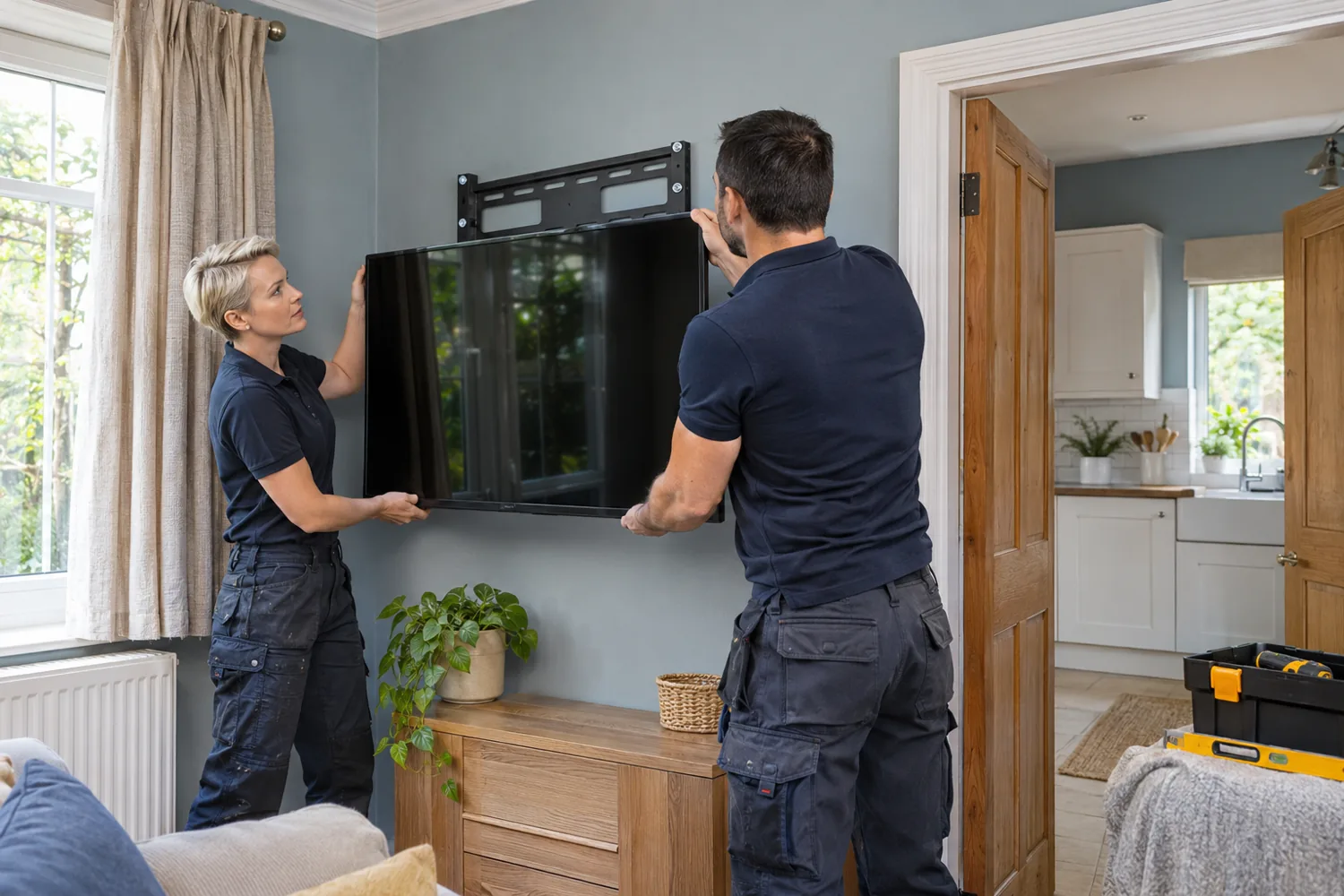
Screens and shelves with the surface assessed
We install suitable television brackets, shelves and agreed wall accessories after checking the item, expected loading and supporting substrate. A stained or newly patched wall needs more information than a general photograph. We establish whether the surface is sound enough for the proposed fixing and explain when another repair or assessment must come first. We agree the position before drilling and use an appropriate approved fixing arrangement.
For televisions, we review bracket compatibility, screen dimensions, viewing height and movement around surrounding furniture. Accessible cable finishing is discussed before the screen is lifted. New sockets, fixed-wiring alterations, concealed cable work and structural reinforcement are distinct instructions for the appropriate trade. We check completed bracket operation or shelf level, and explain any decorating around old fixings instead of assuming a new item covers every previous mark.
Door and cupboard repairs with a checked cause
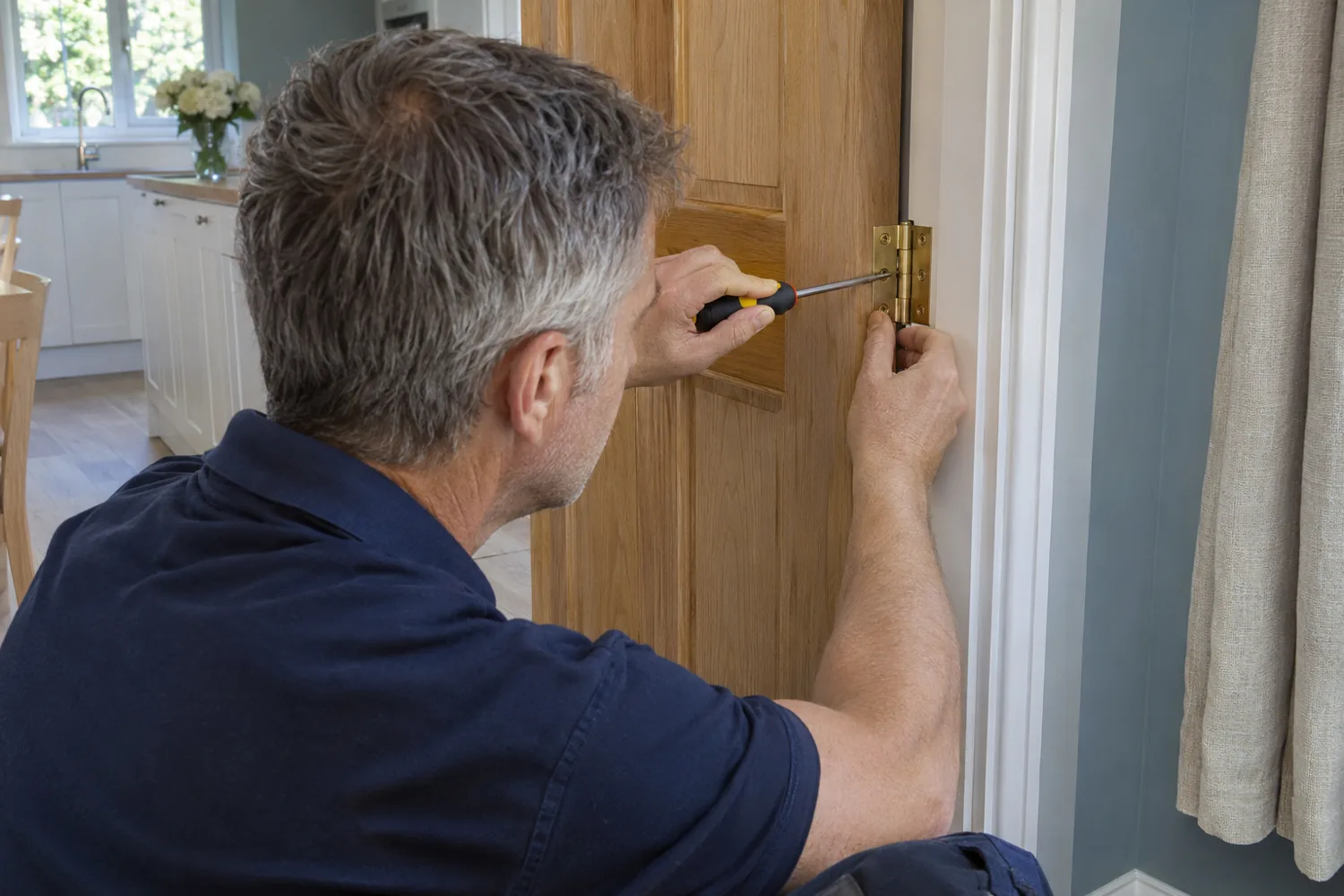
We inspect suitable internal doors, handles, latches and cupboard hinges. We operate the fitting and check the material holding it before deciding on adjustment or a replacement component. A door that catches because a fixing has loosened needs different work from one affected by a distorted panel or damaged frame. We explain what the agreed ordinary repair can achieve and identify significant damage that requires another assessment.
We match replacement hardware to its dimensions and fixing arrangement where suitable components are available. Old holes, surrounding coatings and any later filling are discussed before fitting a different shape. Fire doors and specialist security hardware are not treated as ordinary hinge adjustments. After completing authorised work, we check the door’s movement, latch and handle action. A decorative repair follows the mechanical adjustment where both form part of the agreed list.
Painting and window fittings after the repair stage
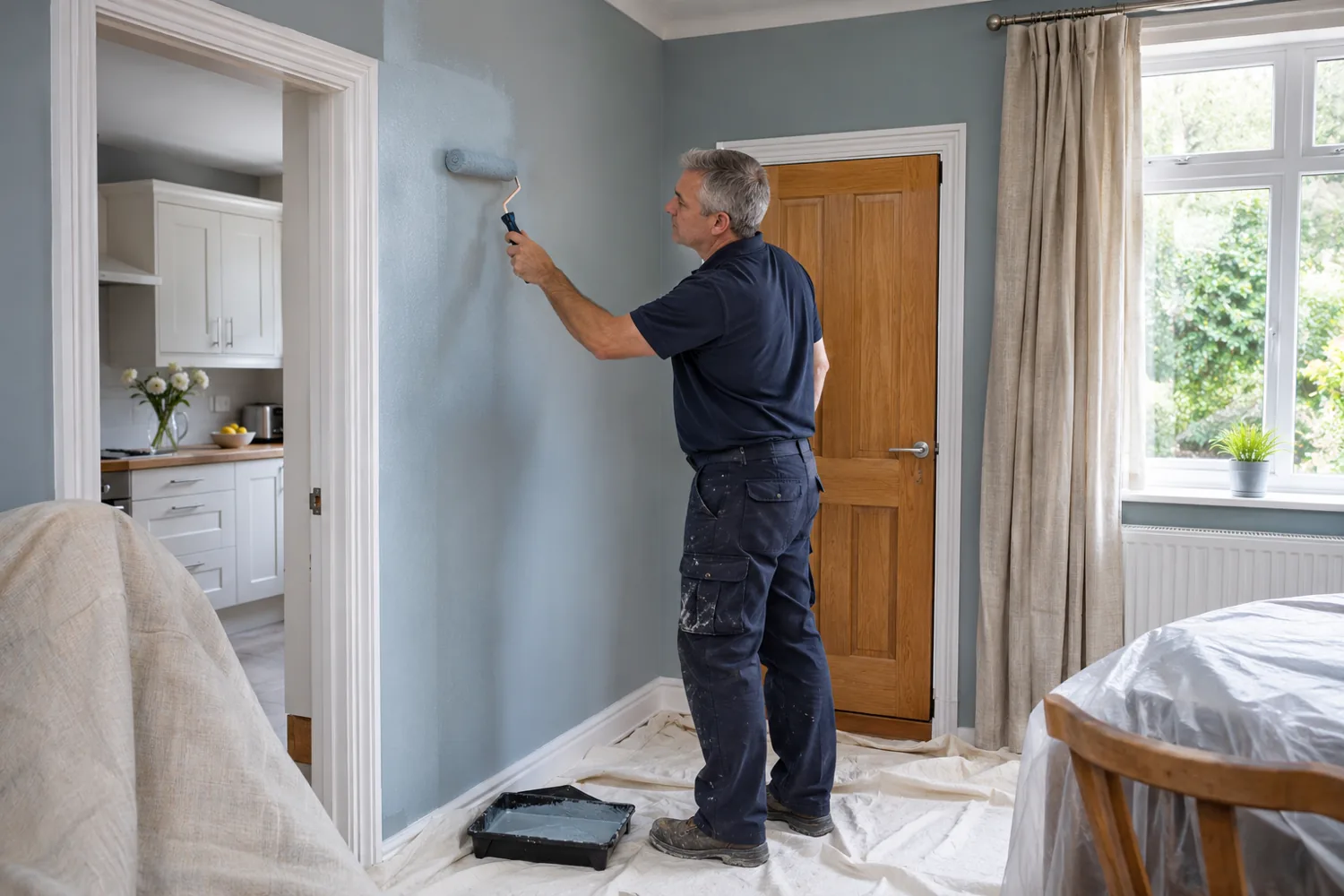
We prepare and paint suitable agreed walls, ceilings and interior woodwork. We assess loose coatings, staining and surface damage, then agree preparation, compatible products and the extent of repainting. We do not describe stain coverage as a cure for moisture or assume that a recently repaired surface is ready for a coating. Where the condition changes the proposed finish, we explain the additional preparation or reason for a later stage before proceeding.
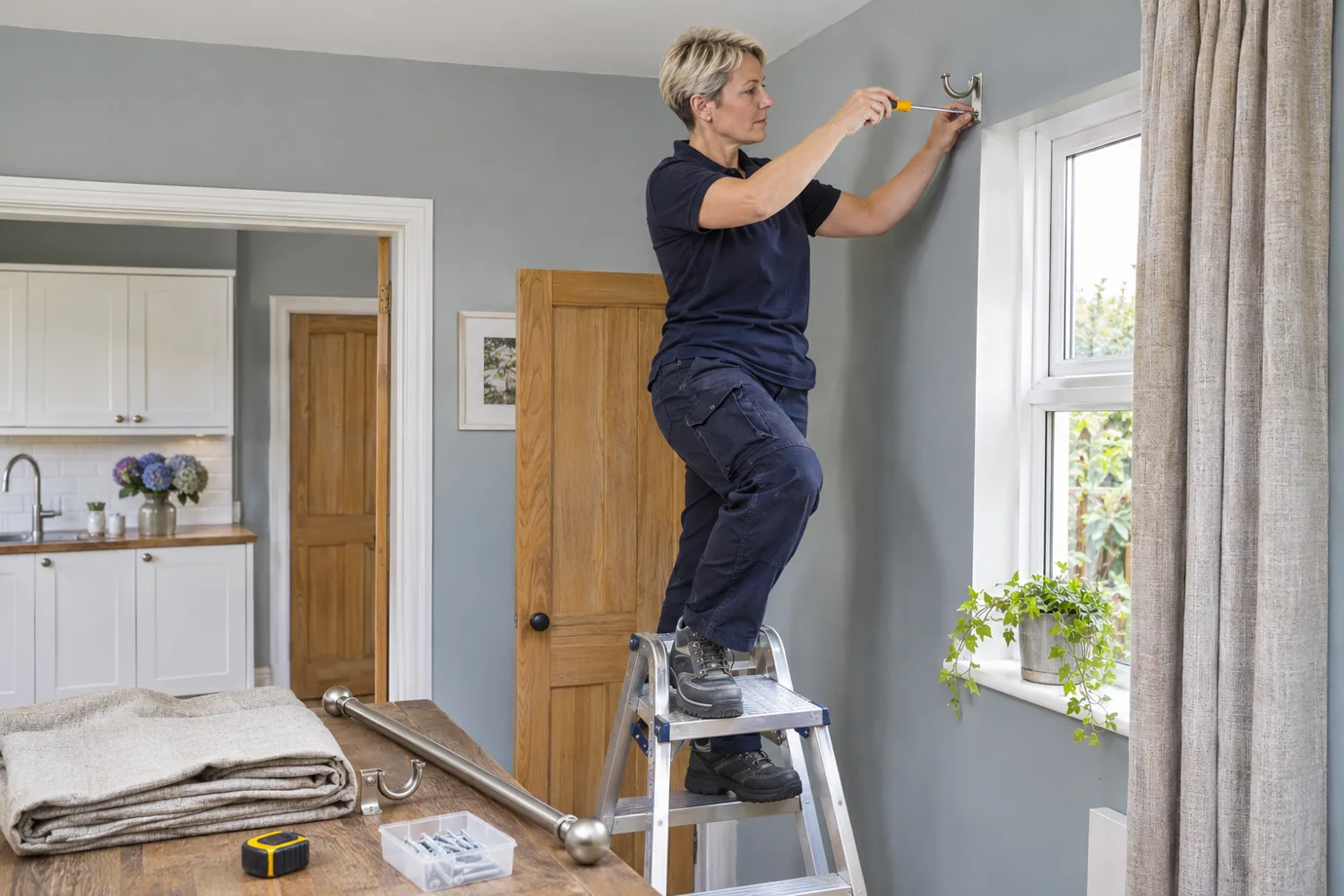
We fit curtain poles, tracks and supplied blinds after checking dimensions, bracket positions, projection and operating clearance. Relevant product safety fittings remain part of the installation. Window fitting can be planned alongside decorating, with drilling and any agreed repairs sequenced before the final coat where practical. We check movement after installation and explain restrictions associated with fresh paint or sealant, using the actual product instructions rather than a universal waiting time.
HOW THE WORK PROGRESSES
A checked repair before the final coating.
Identify the active fault
We review the reported problem, accessible fittings and relevant isolation or support. The repair is described before the surrounding finish is included. Where the source cannot be established within the agreed enquiry, we explain the assessment still required.
Agree parts and working space
We identify compatible materials and protect the immediate area. Other suitable tasks can be arranged elsewhere in the property, provided the products, authority and working space are ready. Changes to the list or charging basis are agreed before work is expanded.
Repair before closing the surface
We carry out the authorised accessible repair and relevant operating checks. The condition of the adjoining material is reviewed before sealing, filling or decorating. New damage or an unresolved defect is discussed rather than concealed to complete the visible finish.
Explain the remaining stages
We show the completed work and identify any curing, drying, missing material or specialist task still outstanding. We explain when a newly treated area can be used according to the product and agreed repair, and clarify whether another attendance has been arranged.
PUBLISHED LONDON COMPARISON
Plan the labour. Confirm the actual price.
We discuss the work and our price before booking. The charging basis and any extras are confirmed for the actual property. These standard external London figures are a comparison, not our confirmed rates or a forecast of your visit length.
| Published weekday daytime charge | External comparison |
|---|---|
| First 30 minutes | £47 |
| Each further 30 minutes | £36 |
| Minimum one-hour labour total | £83 |
| 1½ hours, calculated on the same basis | £119 |
| Materials and additional costs | Materials and shopping time are extra; congestion charges excluded. |
The source states all taxes are included in its rates. This does not establish our VAT position or the extras in our quotation. Published London labour comparison, checked 4 November 2026. Source terms and availability apply.
COMPARISON CALCULATOR
First half-hour. Further half-hours.
Change the planned labour hours to see the same published charging model. The initial period is charged once. This is not an appointment duration estimate or an offer for your property.
PLANNED LABOUR TIME
1 hour
External labour comparison
£83
£47 first ½ hour + £36 further ½ hour
One-hour minimum in this comparison; further half-hour steps. Materials, shopping, congestion and other extras are outside this calculation. No area premium or separate package price is assumed.
PROPERTY DETAILS THAT AFFECT THE WORK
A repair request does not settle responsibility
Tower Hamlets’ private-renting repair information includes renewing bath sealant among examples of minor maintenance. We do not use that example to decide liability for every Bow tenancy, leak or damaged surface. We establish the actual fault, landlord arrangements and authorised instruction before accepting a privately arranged repair.
A resident can show where water appears, while an owner or agent may need to approve investigation, a replacement fitting or later decoration. We agree who makes each decision and which parts of the property are available for the work. Common building systems and damage affecting another property are identified separately; a private handyman booking does not grant authority to alter a shared service or close an unresolved building defect.
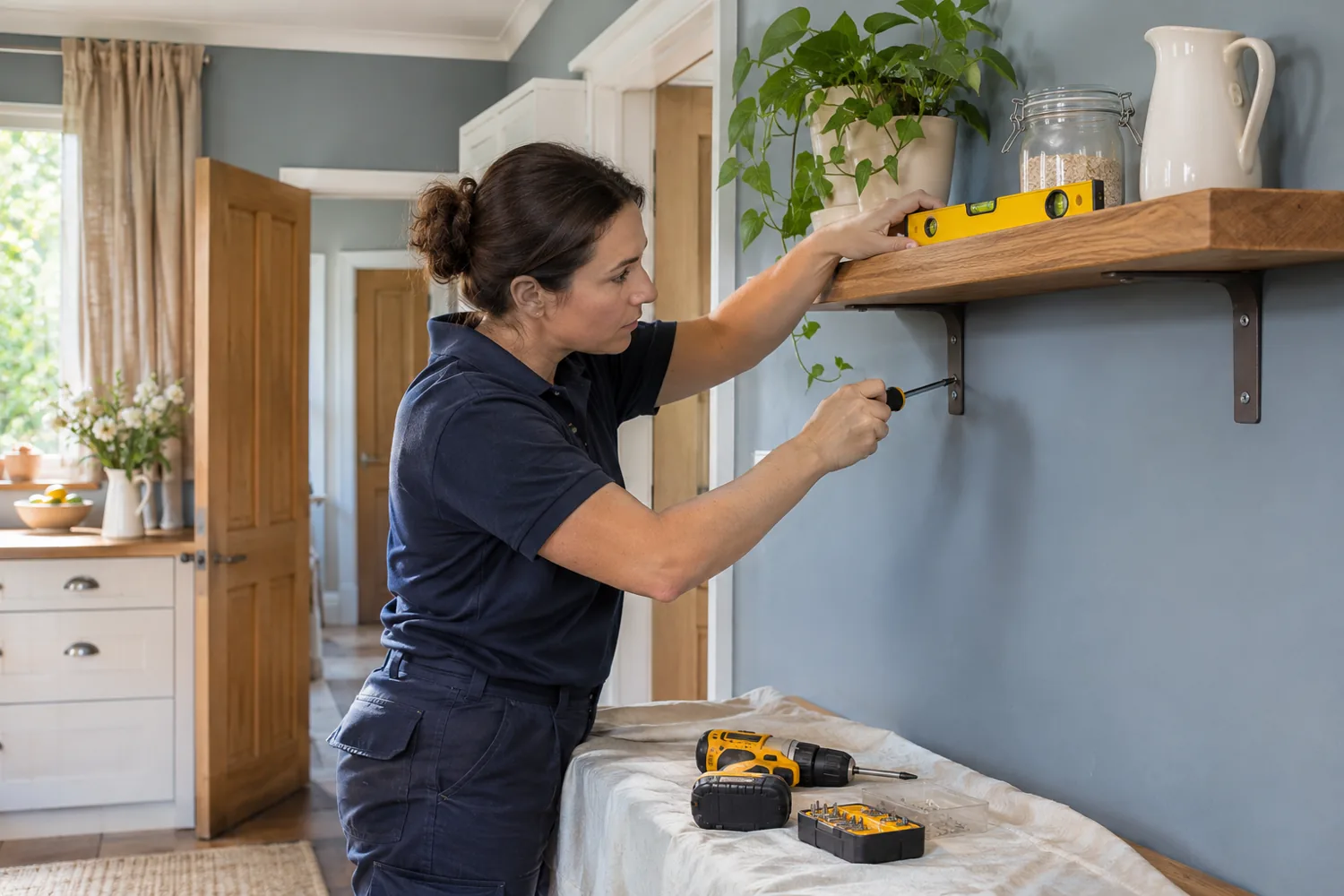
Illustrative shelf-fitting work. Images show service tasks, not claimed customer projects or local premises.
QUESTIONS ABOUT YOUR VISIT
Seals, drying and responsibility for the work.
Does a new seal repair movement in the bath or basin?
No. We examine the joint and adjoining fitting before agreeing sealant renewal. Movement, loose supports or damaged backing can undermine a replacement seal. We explain when that underlying issue needs a different repair rather than presenting a larger bead of sealant as a solution.
Can you specify a fixed waiting time for every sealed joint?
We use the selected product’s instructions and the actual repair conditions. Different materials and products can have different curing requirements. We explain the relevant restriction at handover, including any area that must remain dry or unused, instead of applying one unsupported time to every joint.
Will a stain stop returning once the wall is painted?
We do not make that assumption. We assess the repair status, surface condition and coating requirement before decoration. An unresolved leak or moisture problem is separate from covering a stain. We agree preparation and paint only for a suitable surface and explain when further assessment is needed.
Can an unrelated furniture job proceed during the drying stage?
We can consider it if there is suitable independent working space, the furniture and fittings are ready and the time has been agreed. We keep it separate from any area that must remain undisturbed. Adding another task does not remove the product’s curing or drying requirement.
How do you handle disagreement about who pays for a repair?
We establish the instructing customer, approving authority and payment arrangement before accepting the work. We do not determine a tenancy dispute from a photograph or a general council example. If approval is unresolved, we explain which requested tasks cannot proceed on that instruction.
Is repainting included whenever you repair a tap?
Only if that decorative work has been discussed and agreed. The condition and extent of the affected surface, preparation, colour and drying stage can change what is needed. We distinguish the accessible plumbing repair from cabinet repair, sealing and decoration so each part of the price is clear.
Related fitting and repair services
Our plumbing page describes suitable repair enquiries. Painting and decorating is agreed around the repaired surface, while small fitting repairs and furniture assembly can be reviewed as separate items.
A nearby property with its own repair list
A repair at another address in Stratford, Bethnal Green or Canary Wharf has its own fitting, approval and material requirements. See our London and M25 coverage for further enquiry areas.
HANDYMAN LOCAL SERVICES / BOW
Show us the fault and the affected surface.
Send the Bow postcode and photographs of the fitting and surrounding area. We discuss the repair, materials, stages and actual price before booking.